Why Start a Food Truck Business in India?
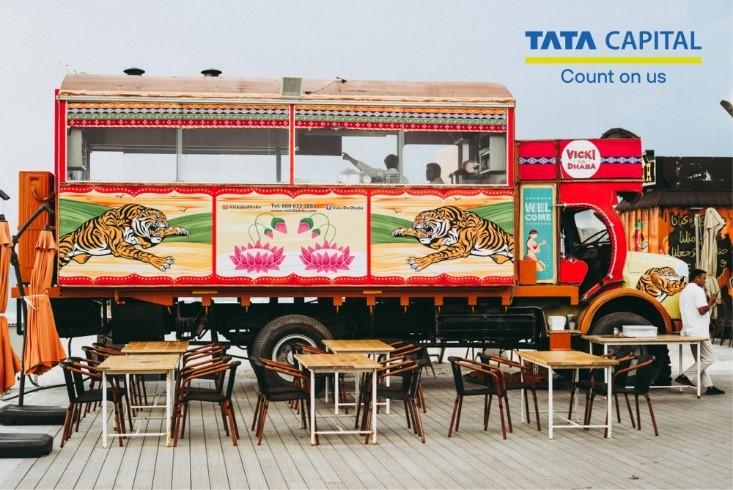
A food truck business houses a mobile kitchen in a large motor vehicle. This mobile kitchen can serve different areas of the city or the metro. In India, we are already used to buying Indian snacks and other street foods sold on pushcarts, etc. A food truck is a step up from these mobile carts. Also, food trucks in India serve various eclectic foreign cuisines like Italian, Mexican, Chinese, etc., to tempt the taste buds. The food truck experiment has been very popular in the U.S. and other countries, and it is beginning to take off in a big way in India as well. Food truck ideas are popular because:
- A food truck can park and do business from anywhere in the city, increasing its reach.
- A mobile food truck enables the owner to be mobile and access most areas for selling food and other edible items. Today it could be an apartment block; tomorrow it could be an office complex; and the day after, a school.
- Both hot and cold items can be sold from a food truck. Piping hot food can be quickly cooked and served according to the diner’s wishes.
- A food truck naturally enables people to maintain social distance norms as buyers can safely park a certain distance away from the food truck and other diners or simply eat their food in the comfort of their car.
- A wide variety of vegetarian and non-vegetarian dishes, including various other cuisines, are available on food trucks. Ideas for a food truck could range from cheesy pizza to spicy Chinese food to delicious tacos and burritos or ethnic dishes like a Kathi roll, depending on the food truck’s choice. These can be accompanied by a soft drink or ice cream if you so desire. This could be one of the most successful food truck ideas in India.
- Food truck ideas are emerging as a popular novelty in India and, according to ‘the Indian Retailer’, the business is expected to register an annual growth rate of 8.4%.
How to Start a Food Truck Business?
Intrigued by the food truck business idea? Here are some of the necessary steps you have to take to start your dream food business:
- Start with market research to analyze the market needs in terms of defined foods. A successful food truck idea will enable you to establish your market niche and develop a unique selling proposition for your food truck. This will also allow product differentiation, a unique food concept to compete for food trucks’ attention and facilitate establishing your target demographic. Creating a transparent, differentiated logo and a one-of-a-kind name for your food truck idea is necessary.
- Establish all your company’s credentials and obtain the required licenses.
- Select the menu items for your food truck, whether they will be hot or cold items. This will also help determine the mobile kitchen dimensions and other kitchen parameters.
- Buy essential equipment such as a good, sturdy, elongated truck that can accommodate a mobile kitchen, cooking systems, a point of sale system to record transactions, staff uniforms, etc.
- Devise advertising and promotion strategies for your food truck and insurance.
- Obtain the licenses and certifications: Obtaining food safety certifications is also necessary from the FSSAI, or the Food and Safety Standards of India, and a fire safety certification from the fire department to certify that your cooking area, boiler, gas, and grills are all fire protected. The local municipality should also give you clearance to supply food to the public in the different areas within the city. Lastly, a commercial vehicle license to carry on your ideas for a food truck business should be obtained from the Road Safety department.
- Ensure that there is working capital for regular, recurring expenses like cooking ingredients, fuel, licenses, and permits, which are renewable annually. You must also provide for employee costs.
Also, read – 10 Profitable Business Ideas for Villages and Rural Areas in India
Top 5 Food Truck Business Ideas in India
Indians, as we have iterated before, are already accustomed to buying food from mobile stalls called “thelas,” or pushcarts. The food truck concept is a notch higher than the traditional portable stalls.
The following are some food truck business ideas in India you can dabble with:
- Freshly prepared sushi rolls: Indians love Japanese (and Chinese) food. This would appeal to the palates of many millennials and could be a successful food truck idea in India.
- Food trucks focused on serving only organic food: Because of the health benefits, this food truck idea would appeal to the health-conscious segment. With an increasing incidence of lifestyle diseases in India, this healthy food truck idea could potentially appeal to many people.
- Fusion burger food truck: This food truck business idea would appeal to millennials and Gen-Z customers, especially if you decide to serve Asian sauces and traditional burgers or even give the burgers an Indian twist.
- Shawarma: A shawarma food truck business idea could appeal to meat lovers, especially if served with traditional dill pickles that replicate the Lebanese style of making shawarma. Using pita bread and an assortment of vegetables will enhance the taste and be shawarma with a difference.
- Gourmet gelato ice-creams: Indians are famous for their sweet tooth, and the Indian weather is most suitable for ice-creams. Customers will relish gourmet gelato ice cream in exotic flavours, especially to round off a lovely afternoon meal. This could be one of the most successful food truck ideas in India.
Also, read – 10 Best Manufacturing Business Ideas for Entrepreneurs in India
Cost Outlay and Budgeting for How to Start a Food Truck Business
Every food truck business is different, meaning their cost outlay and budgeting will also be different:
Total cost: The cost of opening a food truck idea can vary from Rs 15 lakhs to Rs 25 lakhs.
Truck cost: A good, wide-bodied, elongated truck to accommodate your mobile kitchen would cost anywhere from Rs 8 lakhs to Rs 12 lakhs. You have a wide assortment of truck manufacturers and brands to choose from to launch your food truck idea in India.
Equipment cost: Buying and installing state-of-the-art kitchen equipment would cost approximately Rs 2 lakhs to Rs 3 lakhs.
Licences and advertising costs: This could cost up to Rs 1 lakh.
Working capital: You need to provide at least Rs. 1 lakh to Rs. 2 lakh for the liquidity reserve and working capital to buy groceries, provisions, and kitchen ingredients.
You can quickly obtain a business loan from Tata Capital to kick-start your food truck ideas in India.
Also, read – How to Open a Wholesale Business in India
Required Licenses & Permits for Food Trucks in India
Many important documents are necessary to be eligible to operate a food truck in India. They ensure that all safety and legal systems are operational before you open for business. The most important one is the FSSAI Registration which ensures that food safety and hygiene standards are maintained.
Besides that, the following are also required:
- A Trade License: Obtained from the local municipal corporations to verify compliance with health and sanitation norms.
- Fitness Certificate and Vehicle Permit: Obtained from the RTO to prove roadworthiness of vehicle.
- Fire Safety Certificate: Obtained from the local fire department in case an LPG is used.
- No Objection Certificate: Obtained from the local traffic police or municipality for parking and operational approvals.
- FST Registration: In case annual turnover is more than ₹20 lakh.
- Environmental Clearance: Maybe required if generators are being used.
Also, read – How to Open Gold Jewellery Shop in India
Food Truck Business Loans: Funding Options with Tata Capital
With TATA Capital, you can fund your dream food truck business:
- Loan corpus: The loan amount varies from Rs 5 lakh to Rs 75 lakh. Your financial requirements for funding the setting up of a food truck idea in India can be very quickly met.
- Loan tenure: The loan tenure varies from 12 months to 36 months. You can easily plan your cash flows and reschedule your principal repayments and interest payments according to your convenience.
- Collateral or security: The above loans are unsecured loans that do not require offering your business or personal assets as collateral.
- Eligibility for applying for a business loan: The eligibility conditions are simple and include the following:
1. The age of the applicant for a business loan should be between 25 and 65 years old.
2. The business must have a profitable track record for three consequent financial years
3. The business’s sales revenue and turnover should indicate a positive upward trend.
4. Your CIBIL score must be 700 at the time of applying.
5. A qualified chartered accountant should audit all the financial books of account and financial statements.
- KYC documents are required for securing a Tata Capital Business Loan:
1. All identity and address proof documents
2. Proof of business ownership, including partnership deeds, sole proprietor declaration etc.
3. Licence documents for carrying out the business and GST TIN
4. Documents relating to the company’s incorporation
5. Bank statements for the last six months certified by the concerned banker
6. IT returns and all business financial statements, including audited balance sheets and profit & loss statements.
- Interest rates on a Tata Capital business loan: Interest rates on a Tata Capital business loan start at 19% p.a. The final interest rate levied would depend on the final assessment of your financial statements, CIBIL score, and other factors. The interest rate for your loan can be fixed or variable. In a fixed interest rate business loan, the EMIs remain fixed, and in the case of a floating interest rate loan, the EMI amounts will be variable. The floating interest rates are linked to the benchmark RBI’s repo-linked lending rate.
- EMI calculator: Tata Capital provides an EMI calculator that enables you to structure your EMI amounts according to your cash flows and financial convenience. You have to enter the principal amount, the interest rate, and the loan tenure to find out the EMI installments payable by you. Fixed EMIs have fixed payment options, and in structured EMIs, you can customize your payments at your convenience to launch your food truck idea.
Also, read – A Complete Guide to Start a Furniture Business in India
Marketing Strategies for Food Truck Businesses
The marketing of your food truck needs to be done in a proper manner so that customers choose you in a competitive market. To market a food truck properly, a combination of digital and community-focused strategies are required:
- Brand Identity: Have a unique set of values and a distinct voice to stand out in a competitive market.
- Online Presence: Keep your website and social media updated with real-time locations to make sure that customers can find you.
- Social Engagement: Use a poll to help flowers decide the parking spots.
- Loyalty Programs: Use emails to market rewards, such as discounts, to repeat customers.
- Online Ordering: Participate in the online food delivery practices.
Also, read – How to Start a Spice Business in India?
Operational Challenges & Solutions for Food Truck Owners
There might be various operational challenges that a food truck owner might come across. Some potential challenges and their solution are mentioned below:
- Licensing and Regulation: Research health permits, zoning, and insurance to navigate complicated local problems.
- Financing: Try to obtain microloans or crowdfunding.
- Menu and Space: Keep menus small and low-cost for the limited kitchen space.
- Commissaries: Use commercial kitchens for prep, storage, and parking to overcome infrastructure struggles.
- Location Scouting: Target areas like festivals or breweries that get high foot-falls.
- Staffing: Hire workers who can perform multiple tasks, especially in a cramped environment.
- Marketing: Use social media to broadcast locations and daily specials to customers.
- Maintenance: Factor routine vehicle upkeep into your schedule to prevent breakdowns from stopping daily operations.
Also, read – How To Start A Clothing Brand In India
Staffing & Management Best Practices
To ensure that a food truck runs efficiently, the staffing needs to be done in a strategic manner. This would maintain profits in a small working space. Some important practices include:
- Define Clear Roles: Distinguish between ‘Front of House’ workers, who provide friendly, knowledgeable customer service and ‘Back of House’ workers who provide cooking, admin, and marketing services to ensure all operational areas are covered.
- Prioritize Culinary Quality: Hire a high-quality cook who masters your specific cuisine to allow you to provide top-notch dishes.
- Optimize Efficiency: Support your lead chef with kitchen staff to reduce wait times.
- Select Experienced Management: Hire managers with proven food truck results.
Conclusion
The food truck business idea has tremendous potential to be a growth sector in the economy. You can please your clientele’s palates by serving them piping hot or cold, fresh gourmet and exotic dishes at a reasonable price. If your USP is to market food products sold in gourmet, fine-dine restaurants, the public at large can derive enjoyment from eating such dishes at reasonable prices. Who can say, if you successfully start materializing your ideas for the first food truck business, you can even end up having a country-wide food truck business chain, couldn’t you? Don’t delay; if you have the means, strategy, and an excellent idea, contact Tata Capital today to obtain a business loan to fund your food truck and start your exciting food truck journey.
FAQs
Starting a food truck in India typically costs between ₹15 lakh and ₹25 lakh. This includes the truck itself, kitchen equipment, licenses, branding, and initial working capital. Costs vary based on truck size, cuisine type, equipment quality, and the city of operation.
Metro cities like Mumbai, Delhi NCR, Bengaluru, Pune, Hyderabad, and Chennai are ideal due to high footfall, young consumers, office hubs, and event culture. Tourist cities such as Goa and Jaipur also perform well because of demand for diverse, quick-service food options.
An FSSAI registration or license for a food truck usually takes about 5 - 45 days, depending on the category (basic or state license), document accuracy, and local authority processing time. Delays may occur if inspections or additional clarifications are required.
Highly profitable food truck concepts include fusion burgers, rolls and wraps, shawarma, momos, gourmet ice creams, and regional street food with a modern twist. Concepts that balance low ingredient cost, quick service, and mass appeal tend to generate higher margins.
No, you cannot legally operate a food truck without a commercial vehicle license. The truck must be registered as a commercial vehicle with the RTO, and required permits and fitness certificates must be obtained to operate lawfully on public roads.





 29 December 2025
 12 mins read

 Previous Post