Get the Tata Capital App to apply for Loans & manage your account. Download Now

Blogs

SUPPORT

Tata Capital > Blog > Capital market instruments: Types, tools & financial instruments in India

Wealth Services

Capital market instruments: Types, tools & financial instruments in India

Capital market instruments: Types, tools & financial instruments in India

The Indian capital market is one of the fastest-growing in the world. It refers to the various financial markets and exchanges in the country where securities such as stocks, bonds, and derivatives are traded. Here, we understand the structure of capital markets and the instruments traded herein.

Overview: Understanding financial instruments in India

In India, financial instruments, or capital market instruments, help individuals save, invest, borrow, and manage money. They play an essential role in personal finance and economic growth. Savings accounts and fixed deposits are types of financial instruments. Some other examples include market-based products, such as shares, bonds, mutual funds, and insurance plans. The purpose of each instrument is different. Some aim at earning returns and protecting against risk, while others focus on meeting future goals.

If you understand the different types of financial instruments in India and how they work, you can make better decisions with your money. You can also confidently plan for higher education, home ownership, retirement, and emergencies.

Learning the basics of the tools of the capital market is the first step toward managing your finances wisely and responsibly. This knowledge encourages discipline and supports long-term stability.

What is the capital market in India?

Capital markets refer to the financial markets where securities, such as stocks and bonds, are bought and sold. These markets provide a means for companies, governments, and other entities to raise capital by issuing securities and for investors to buy and sell these securities. The two main types of capital markets are the primary market, where new securities are issued, and the secondary market, where existing securities are traded. The most well-known capital market is the stock market, but there are also bond markets, commodity markets, and other financial markets that make up the capital markets.

Key functions of the capital market

Capital markets facilitate the flow of capital from investors to companies and governments that need funding. They include the stock market and bond market and provide a mechanism for companies to raise money by issuing stocks and bonds and for investors to buy and sell those securities. They also help to transfer risk by allowing investors to diversify their portfolios and provide liquidity for buying and selling securities. Additionally, capital markets help to allocate resources efficiently by directing funds to companies and projects with the best growth prospects.

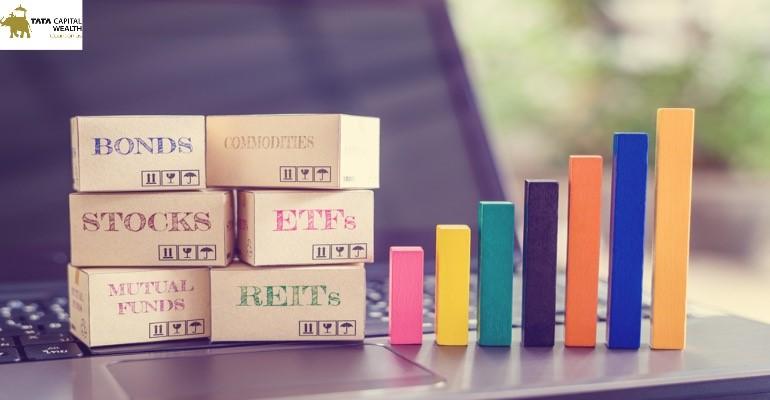
Types of financial instruments in the Indian capital market

  1. Equities

Equity is a capital market instrument that businesses issue to raise money. It also goes by the name equity share. You can acquire ownership and voting rights in a firm by purchasing its shares. Until you sell the shares on the secondary market or the business is liquidated, you retain a portion of the company. Additionally, you get a share in the company’s gains and losses, and dividends are given out for the earnings. The performance of the company, which affects the investor’s return, determines how much the share value will rise.

Equity has historically produced larger returns than other capital market assets, although it is a high-risk investment.

  1. Preference shares

These shares have a preference over equity shares (holders). They are those that receive first consideration when dividends or liquidation proceeds are paid out. According to this rule, preference shareholders must get dividends or other payments before equity stockholders. Preference shareholders do not have voting privileges within the firm, nevertheless. Unlike equity shares, preference shares are often not traded on the secondary market. The various types of preference shares are:

Redeemable: The issuing company has the option to subsequently choose to repurchase or redeem the preference shares.

Irredeemable: The redemption happens only upon liquidation of the company.

Convertible: Preference shares may be converted to equity shares at a later date.

  1. Mutual funds

Mutual funds remain the most popular means to invest in capital markets. While mutual funds are not directly traded in the markets on a real-time basis, the funds invest directly into instruments that are traded on capital markets. There are various types of mutual funds with varied risk/return profiles.

Here are the most basic types of mutual funds:

Equity mutual funds: Invests at least 65% in equity stocks traded in the stock market.

Debt mutual fund: Invests in debt instruments including bonds, T-bills, commercial paper etc.,

Balanced mutual funds: These funds invest in both equity and debt mutual funds. These are ideal for someone with a moderate risk profile and safe, modest returns.

  1. Debt instruments

To finance capital-intensive projects, both governments and businesses issue debt instruments. Debt is a kind of borrowing with no ownership rights in the organization that is issued on primary or secondary markets. The term of the debt instruments is typically short, after which the issuing corporation is required to refund the principal.

Monthly, quarterly, semi-annually, or yearly, interest payments are made. Municipal, governmental, and corporate bonds and debentures are examples of debt instruments. Debt investments are less risky than equity investments. However, the default risk might be greater if the issuing company’s financial situation is poor. Therefore, you must invest in debt instruments after examining the issuing company’s credit rating and financial situation.

  1. Derivatives

Capital market tools known as derivatives derive their value from an underlying asset. Bonds, equities, metals, commodities, money, and so on are all examples of underlying assets. These instruments are traded mostly for speculative purposes, although they may also be used for arbitrage and hedging. Derivatives are, therefore, ideal for seasoned investors in the financial market as they are seen as being more volatile and risky than stocks. Futures and options contracts are traded in secondary markets in India.

  1. Exchange-Traded Funds (ETFs)

Using ETFs, a lot of individuals may pool their money to invest in bonds, stocks, or gold on the capital market. Most ETFs are registered with the Securities and Exchange Board of India (SEBI) and have characteristics of both shares and mutual funds. ETFs are similar to mutual funds and are beneficial to investors who wish to invest in an index, a basket of equities, or a commodity.

Key features & structure of Indian capital market instruments

The Indian capital market helps companies raise long-term funds and gives investors a place to grow wealth. It includes instruments traded in primary and secondary markets, such as shares, bonds, and debentures. Their structure depends on risk, return, maturity period, and ownership rights.

The following points list the key features and structure of the Indian capital market instruments:

  • Equity instruments provide investors with ownership in a company. They offer dividends and capital growth over time.
  • Debt instruments like bonds provide a fixed income. They have a defined maturity and repayment structure.
  • Primary market instruments are issued first to raise funds directly from investors.
  • Secondary market instruments are traded between investors.
  • The rules for the capital market are set by SEBI. It aims to protect investors.
  • The risk and return levels vary, helping investors choose instruments based on goals and comfort.

Risks & returns: Evaluating capital market instruments

When you evaluate the balance between the risk and return associated with capital market instruments, you can choose instruments that match your goals, time horizon, and comfort level. To achieve higher returns, you must be willing to take higher risks. Thus, careful evaluation is essential.

  • Equity instruments can give high returns, but prices may change often due to market movements.
  • Debt instruments offer stable returns, but usually provide lower growth compared to shares.
  • Market risk, interest rate risk, and inflation risk affect returns differently.
  • Diversification reduces risk by spreading investments across different instruments and sectors.
  • Time horizon and personal goals play an important role in deciding suitable risk levels for investors today.

How to choose the right financial instrument for your portfolio?

Choosing the right financial instrument for your portfolio depends on your goals, income, and risk comfort. You must first decide why you are investing, such as for short-term needs, long-term growth, or safety. Then, understand how much risk you can handle. Equity instruments suit investors seeking higher long-term growth. Debt instruments offer stable and predictable returns. Diversifying across different instruments helps to reduce risk.

You must also consider your investment time period and liquidity needs. Remember to review your portfolio regularly. If required, adjust your investments to reflect changes in your goals or financial situation to stay on track

Difference between primary and secondary capital market instruments

Primary and secondary capital market instruments differ mainly in how and where they are traded. In the primary market, companies or governments issue instruments for the first time to raise fresh funds. You can buy these instruments directly from the issuer through public issues, rights issues, or private placements.

In the secondary market, the same instruments are bought and sold among investors on stock exchanges. No new funds go to the issuing company. The secondary market provides liquidity, price discovery, and flexibility, helping investors easily enter or exit their investments when needed.

Conclusion

The above instruments are the most prominent ones traded on the capital market. It is important to understand the nuances of these instruments before investing in them. For assistance, you can always reach out to the Tata Capital Wealth team for more information.

FAQs

What are the main types of capital market instruments in India?

The main types of financial instruments in India are equity shares, preference shares, bonds, debentures, mutual funds, and derivatives. They help companies raise long-term funds and give investors different risk and return options.

What is the difference between primary and secondary capital market instruments?

Primary market instruments are issued by companies for the first time to raise new funds from investors. Secondary market instruments are already issued securities that are traded between investors on stock exchanges.

Which capital market instrument has the lowest risk in India?

Debt instruments like government bonds and treasury bills have the lowest risk in India. The government backs them and offer stable returns. As a result, they are safer than equity or derivative instruments.

Are derivatives safe for new investors in Indian markets?

Generally, derivatives are considered risky for new investors because they involve price fluctuations and leverage. You may face losses in derivatives if you don’t have proper knowledge and experience.

What is the role of SEBI in regulating financial instruments?

SEBI regulates financial instruments in India by setting rules for markets, protecting investors, ensuring transparency, and preventing unfair practices. It ensures that investors can trust the capital market system.

How can I diversify my portfolio with Indian capital market instruments?

You can diversify your portfolio by investing in a mix of equity, debt, and mutual funds across different sectors. The strategy helps to reduce risk and balance returns. Moreover, a diversified portfolio does not let market ups and downs significantly impact your returns.