Get the Tata Capital App to apply for Loans & manage your account. Download Now

Blogs

SUPPORT

Tata Capital > Blog > Loan for Business > What Are Microfinance Loans: Meaning, Types & How To Apply

Loan for Business

What Are Microfinance Loans: Meaning, Types & How To Apply

What Are Microfinance Loans: Meaning, Types & How To Apply

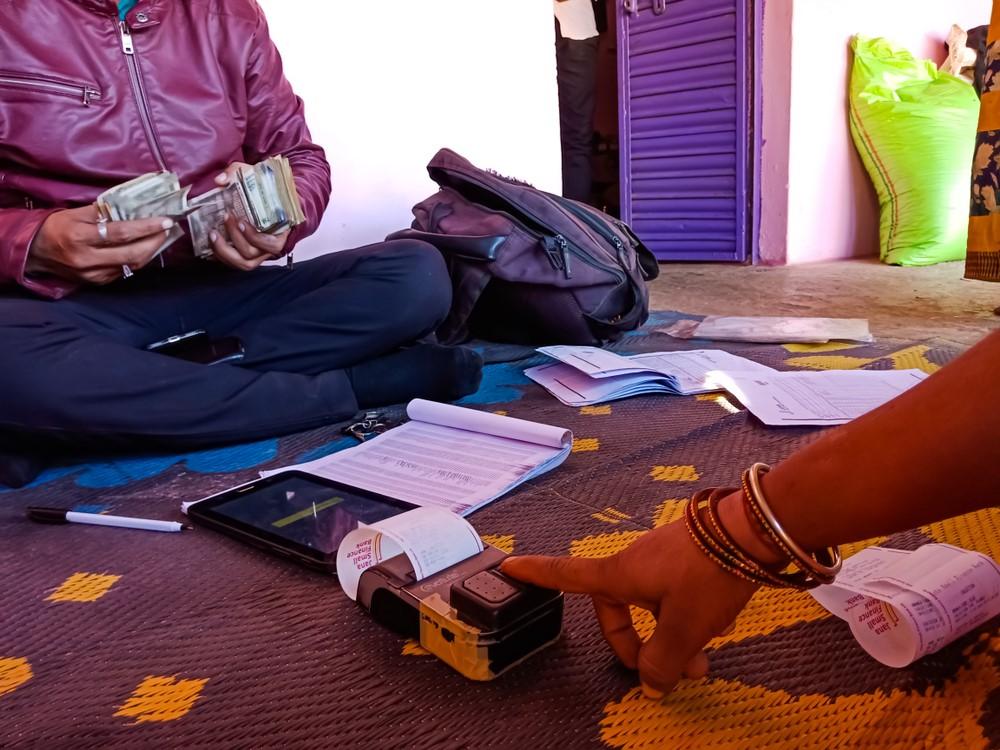
Microfinance has emerged as a powerful tool for financial inclusion and enhancing credit access in India. It provides financial services to low-income individuals and communities who lack access to traditional banking services. One of the most significant aspects of microfinance in India is micro loans, which are small-sized loans offered to the underprivileged to support their livelihoods and small business ventures. 

Let’s explore what micro lending is, the different types available, their benefits and how you can apply for these loans in India.

What are Microfinance Loans?

Micro Loans, as the name suggests, are small-scale credit facilities provided to small business owners in India. These are provided to those business people who otherwise do not have access to conventional credit facilities. The aim here is to provide them with necessary resources in the form of micro business loans to start their new business, generate a livelihood and boost their savings. These loans are generally of small amounts and the repayment terms are designed to be flexible and affordable for the borrowers.

Types of Microfinance Loans in India

Microfinance facilities can be divided into the following different categories:

Micro Loans

Micro loans are the primary type of microfinance loans. These loans are typically provided to individuals or small entrepreneurs who lack access to traditional banking services due to low income or lack of collateral. The loan amounts are relatively small and are used for various purposes, including starting or growing small businesses, purchasing livestock, funding agricultural activities or meeting urgent financial needs. Micro loans often come with lower interest rates and longer repayment periods than traditional bank loans. One can simply apply for a micro loan online.

Micro Savings

Microfinance institutions also encourage and facilitate micro savings among their clients. These savings products are designed to help individuals build a safety net and develop a habit of saving regularly. Micro savings accounts usually have zero to minimal opening balance requirements and attract interest to motivate people to save more. This financial discipline not only helps individuals manage their expenses but also makes them eligible for larger loans in the future.

Micro Insurance

Micro insurance is another essential aspect of microfinance that provides insurance coverage to vulnerable sections of society. These insurance products are tailored to meet the specific needs of low-income individuals and protect them from various risks, such as health emergencies, crop failures, accidents and natural disasters. Micro insurance ensures that the poor do not fall further into poverty when faced with unforeseen circumstances.

Key Features of Microfinance Loans

Before applying for a microfinance loan scheme, it is vital to understand its features and purpose. Below, we list some of the key features of microfinance loans:

Collateral requirement: One of the benefits of microfinance loans is that they are typically offered without collateral. This makes credit accessible to low-income individuals and first-time entrepreneurs who lack assets.

Economic profile of borrowers: Microfinance primarily serves individuals or small businesses with limited income, aiming to bring financially excluded groups into the formal system.

Loan amount and tenure: Loans are typically small and tailored to your exact needs, business type, and location. Repayment periods are also normally shorter, with instalment plans designed to accommodate irregular income. 

Benefits of Microfinance Loans

Micro lending has several advantages that contribute to the economic development of underprivileged communities. These include:

Financial Inclusion: Microfinance provides access to financial services for those who find it difficult to access credit through the formal banking sector. This is significant for promoting financial inclusion and economic participation.

Poverty Alleviation: By providing capital for income-generating activities, microfinance helps in poverty reduction and the upliftment of these businesses.

Women Empowerment: Microfinance has been instrumental in empowering women by offering them financial independence and decision-making power within households and businesses.

Entrepreneurship Promotion: Micro loans support the growth of small businesses and entrepreneurship, fostering economic growth and job creation at the grassroots level.

Social Development: Microfinance plays a crucial role in addressing social issues like education, healthcare and sanitation by enabling people to afford essential services.

How Does Microfinance Work in India?

There are two modes through which micro lending operates in India. These are:

SHG Bank Linkage Programme for Microfinance

One of the most successful models of microfinance in India is the Self-Help Group (SHG) Bank Linkage Programme. Under this model, women from the same socioeconomic background come together to form self-help groups. These groups pool their savings, which are then linked to mainstream banks. The banks provide loans to the SHGs, and the groups, in turn, lend the money to their members based on their needs. This programme has been highly effective in reaching the rural poor and empowering women.

Microfinance Institutions

Apart from the SHG Bank Linkage Programme, there are various Microfinance Institutions (MFIs) in India that provide microfinance services. MFIs are specialised financial institutions that offer a range of microfinance products ranging from micro business loans, micro savings and micro insurance. They cater to both rural and urban populations and operate with a mission to alleviate poverty and foster financial inclusion.

Eligibility Criteria for Microfinance Loan in India

Microfinance loans are generally intended for low-income individuals, including self-employed and small entrepreneurs. They are offered to those engaged in livelihood or income-generating activities such as small trade, agriculture, or home-based businesses.

Microfinance loan eligibility details generally vary by lending institution. In most cases, the following criteria must be met:

  • The applicant must be at least 18 years of age.
  • The applicant must be engaged in income-generating activities.
  • They must complete a loan application correctly.
  • Provide the required documents (generally including the applicant’s proof of ID, such as Aadhaar and PAN cards, address proof, including rental agreements and utility bills, and income documents).
  • Income documents will vary based on the applicant’s employment type.

For exact eligibility requirements, remember to contact your lender!

Documents Required for Microfinance Loan Application

Before applying, it is essential to know what the microfinance loan document requirements are. It’s important to note that different lending institutions will have differing document and KYC requirements. In most cases, it is crucial to keep the following ready:

  • Identity proof: This can be any valid government-issued ID, such as an Aadhaar card, voter ID, PAN card, or driving licence. It’s used to verify the applicant’s identity.
  • Address proof: Documents like Aadhaar, ration card, utility bills, or a rental agreement are used to confirm your place of residence.
  • Photographs: You will likely be asked to submit passport-size photographs for application records and verification.
  • Income details: Basic proof of income is generally required, especially for self-employed or informal workers.
  • Bank account details: A cancelled cheque or a copy of the passbook is required. 

Also,read: Top Government Schemes for Startups  

How to Apply for Microfinance Loans in India?

Applying for microfinance loans in India typically involves the following steps:

Research: Identify the MFI or SHG operating in your area and research the types of loans they offer, the eligibility criteria for micro finance, interest rates and repayment terms.

Documentation: Gather the necessary documents, such as identity proof, address proof, income details and any other documents required by the microfinance institution.

Application: Fill out the loan application form provided by the institution and submit it along with the required documents.

Credit Assessment: The institution will conduct a credit assessment to evaluate your repayment capacity and creditworthiness.

Loan Disbursement: If your loan application is approved, the funds will be disbursed to you as per the agreed terms.

Repayment: Make regular repayments as agreed with the institution to maintain a good credit record and be eligible for future loans.

Online Apply: How to Apply for Microfinance Loan Online

Microfinance loans online applications have become popular as technology progresses, and we break down how to apply online below:

  • First, research different loan providers online and shortlist institutions that suit your requirements. Remember to compare loan amounts, interest rates, repayment terms, and application requirements.
  • After selecting a lender, check the eligibility requirements, including business registration status, GST compliance, credit profile, serviceable location, and repayment capacity.
  • Collect all your necessary documents. This could be business registration papers, recent bank statements, GST returns, financial statements, IT returns, and other details.
  • Submit your microloan application online along with the necessary documents about your business and funding needs.

Common Uses and Impact of Microfinance Loans

Microfinance loans are most often used to start or scale small businesses, manage working capital, support farming or home-based work, and stabilise everyday income. While the loan amounts may be small, the impact is far-reaching.

Microfinance loan schemes offer better control over businesses and livelihoods, improve cash flow, and create more predictable income. Beyond individual borrowers, microfinance plays a bigger role by bringing underserved communities into the formal financial system and building basic saving and money-management habits.

With structured repayments, funds can be reused and extended to others, creating a steady cycle of economic independence and long-term community growth.

Top Microfinance Institutions and Loan Schemes in India

Below are some of the top microfinance loan schemes and institutionsin the country:

  • Ujjivan Small Finance Bank: offers microloans, savings accounts, deposits, insurance, and financial literacy initiatives, improving financial inclusion.
  • Bharat Financial Inclusion Limited (SKS Microfinance) focuses on providing microloans, home improvement loans, and emergency loans to low-income households, especially rural women.
  • Bandhan Bank: evolved from a microfinance institution into a full-service bank offering microloans and personal loans nationwide.
  • CreditAccess Grameen Limited is India’s largest microfinance NBFC, mainly serving rural women entrepreneurs.
  • India Micro Finance Equity Fund: strengthens small MFIs through SIDBI-backed capital support.
  • Pradhan Mantri MUDRA Yojana: offers collateral-free microcredit up to ₹10 lakh to small businesses.  

Also,read: Mudra Loan for Small Business under PMMY  

Conclusion

Microfinance facilities such as micro loans, savings and insurance have proven to be a lifeline for the underprivileged in India, enabling them to improve their lives, build sustainable businesses and contribute to the nation’s economic growth. Through various micro lending models such as the SHG Bank Linkage Programme and Microfinance Institutions, lakhs of people have gained access to financial services and opportunities for socio-economic development.

With the changing financial landscape, financial institutions like TATA Capital are also actively working towards increasing credit access. You can apply for different financing facilities such as business loans and personal loans to meet your financing needs. As microfinance continues to evolve and expand, it will play an increasingly significant role in addressing poverty and promoting financial inclusion in the country.

More About Loans

FAQs

What is a microfinance loan and how does it work in India?

A microfinance loan is a loan intended for low-income individuals or small entrepreneurs, provided by MFIs, SHGs, or lenders, to support income-generating activities. The amounts are usually small and collateral-free.

What are the types of microfinance loans available in India?


In India, microfinance loan schemes can cover income-generating activities, educational loans, emergency loans, and farming loans, among others.

Who is eligible for a microfinance loan in India?


Generally, they are meant for individuals with income, self-employed persons, small entrepreneurs, and rural or semi-urban applicants who are involved in livelihood activities. Eligibility will vary by lender.

What documents are required to apply for a microfinance loan?


Typically, you need identity proof, address proof, photographs, basic income or livelihood details, and bank account information. Group records may be required for group-based loans.

How to apply for a microfinance loan online?


How to apply for microloans varies by lender. Usually, you can apply through the lender’s website or app by checking eligibility, filling out the application form, and uploading documents.

What are the benefits of taking a microfinance loan?


Microfinance loans help provide access to credit, are collateral-free, have flexible repayment, and provide support for small businesses and farming activities.

Which are the top microfinance institutions in India?


The top microfinance loan institutions include Ujjivan Small Finance Bank, Bandhan Bank, CreditAccess Grameen, Bharat Financial Inclusion Limited, and institutions linked with MUDRA and SIDBI.

What is the difference between microfinance and traditional bank loans?


Microfinance loan institutions offer smaller, collateral-free loans designed for low-income borrowers, whereas traditional loans involve higher amounts, stricter eligibility, collateral, and formal credit assessment.