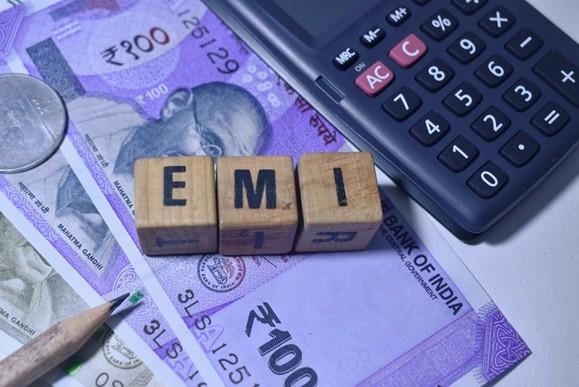
When you avail of a loan, the common terms you come across are loan tenure, interest rate, and EMI. The EMI, or Equated Monthly Installment, is the amount you must return to the bank every month to repay the loan amount. Understanding what EMI is, its types, calculation, and working is beneficial for the smooth repayment of a loan.
What is EMI?
EMI’s full form is Equated Monthly Installment. It refers to the fixed amount you must pay every month to repay a loan within a specified tenure. It includes both the principal amount and the interest charged by the lender, divided equally across the repayment period. EMIs are a convenient and structured way to manage loan repayments, making large financial commitments, such as home loans, car loans, or personal loans, affordable over time.
In India, EMIs play a vital role in financial planning. They enable you to achieve a balance between borrowing and monthly expenses. Factors like loan amount, interest rate, and tenure influence the amount of EMI you are obligated to pay. If you choose a shorter duration, your EMIs will rise. But your EMIs will fall in case the duration opted for is longer. Knowledge about EMIs helps you make informed financial decisions and avoid defaults.
Understanding the EMI full form and how it works
You will often come across the term EMI when you’re speaking to a loan agent or when you’re buying something costly. Most e-commerce websites allow you to pay for smartphones, kitchen appliances, travel tickets, etc., via an EMI plan. EMI’s full form in banking is Equated Monthly Installments, and it is a convenient way to pay off loans over time through regular, manageable installments rather than a single lump sum payment.
For instance, if you’re purchasing a smartphone worth Rs. 80,000, you can either pay the entire amount upfront as a lump sum or choose to repay it through an EMI plan over 12 months. The EMI plan divides the smartphone’s cost price (Rs. 80,000) into 12 equal installments while charging an additional interest on these payments. Thus, under the EMI plan, you will be required to pay around Rs. 7,200 per month, considering the store charges an interest of 8%.
Each EMI consists of two main components: the principal and the interest. The principal is the original amount borrowed, while the interest is the cost charged by the lender for providing the loan. Initially, a larger portion of the EMI goes toward interest. However, the share of principal increases as the loan progresses. The distribution of payments is handled by the amortization schedule to ensure that you repay both parts evenly over the tenure.
The loan tenure, which can range from a few months to several years, directly affects the EMI amount. If the tenure is longer, the EMI is spread across a longer period, making the installment amount smaller. However, if the tenure is shorter, the EMI is higher.
EMIs are typically paid on a fixed date each month, making them predictable and easy to include in financial planning. You can pay EMIs through various methods, such as auto-debit, post-dated cheques, or online transfers. You must know how EMI works for different types of interest rates. The EMI amount remains constant throughout the loan tenure in a fixed interest rate loan. However, the EMI may change depending on market fluctuations in the case of floating interest rates.
EMI calculation: Formula with examples
Calculating an EMI helps borrowers understand their monthly repayment obligation before taking a loan. The standard EMI formula is:
EMI = [P × R × (1 + R)ⁿ] / [(1 + R)ⁿ – 1]
where,
P refers to the principal loan amount
R refers to the monthly interest rate
N stands for loan tenure in months
This formula ensures that borrowers can evenly repay both the principal and interest over the entire tenure. The interest portion is higher during the early stages of repayment, gradually reducing as the principal balance decreases.
Example:
Suppose you take a home loan of Rs. 10,00,000 at an annual interest rate of 10% for a tenure of 10 years (120 months).
Step 1: Convert the annual rate to a monthly rate.
So, you will be able to clear off the loan as per schedule if you pay an EMI of Rs. 13,215 every month. You will pay a total of Rs. 15,85,800 over 120 months (Rs. 13,215 x 120). Since the principal loan amount was Rs. 10,00,000, the additional Rs. 5,85,800 is the interest payout.
Using this formula, you can estimate EMIs for different loan amounts, interest rates, and tenures, helping you choose affordable repayment options and plan your finances more effectively.
Types of EMI & calculation methods
When taking a loan in India, understanding EMI calculation can significantly impact your repayment strategy and total cost.
In a fixed-rate EMI, the interest is calculated on the entire loan amount throughout the tenure, and the EMI remains constant from the beginning to the end. Those who prefer to have a fixed monthly payment that they know in advance should opt for this method. However, since interest doesn’t reduce as the principal is repaid, the overall interest cost tends to be higher.
In contrast, a reducing balance EMI, also known as diminishing balance, recalculates interest each month on the outstanding principal. As the principal decreases with each payment, the interest component also reduces over time. This method ensures you pay interest only on the remaining loan amount, resulting in lower total interest outgo. However, EMIs may fluctuate slightly with changing rates, and initial payments are typically higher.
The following table compares the two types of EMIs:
Aspect
Fixed-rate EMI
Reducing balance EMI
Interest calculation
On the entire loan amount
On the remaining principal balance
EMI amount
Constant throughout tenure
Gradually decreases over time
Total interest paid
Higher
Lower
Best for
Short-term or small loans
Long-term or high-value loans
Flexibility
Less flexible
More dynamic and cost-effective
Types of EMI
Generally, Indian lenders offer two types of EMIs: fixed EMIs and flexible EMIs.
Fixed EMIs remain the same throughout the loan tenure, as both the principal and interest components are predetermined. Consequently, this EMI option provides predictability and makes monthly budgeting easier, ideal for borrowers who prefer stability and consistent payments. However, you may have to pay a higher interest component in the fixed EMI option if market rates decline during the loan period.
Flexible EMIs, on the other hand, allow adjustments in repayment schedules based on changing financial situations. Borrowers can increase or decrease EMI amounts, make part-prepayments, or even pause payments under specific conditions. This option provides greater control and convenience. It is ideal for those with an unstable income.
Choosing between the two depends on your financial discipline, income stability, and comfort with market-linked rate variations.
How is EMI calculated?
EMI is calculated based on three key components: the loan amount (principal), the interest rate, and the loan tenure. Banks and financial institutions use a mathematical EMI formula to calculate your monthly installment. It ensures systematic repayment of both the principal and interest.
Fixed-rate method
In the fixed-rate EMI system, the interest is calculated on the entire loan amount throughout the repayment period. The EMI calculation remains constant for the full tenure, making it easier for borrowers to plan their budgets. However, since the interest portion does not reduce as the principal is repaid, the overall cost of borrowing tends to be slightly higher.
Reducing balance method
In the reducing balance method, the interest is charged only on the outstanding principal each month. As borrowers make payments, the principal decreases, leading to a gradual reduction in the interest portion. This method results in lower total interest outgo compared to fixed-rate EMIs and is commonly used for home, car, and business loans in India.
Most banks and NBFCs in India use the reducing balance method for transparency and cost efficiency.
How to use EMI calculators?
An online EMI calculator is one of the easiest ways to estimate your monthly loan payments before applying. Tata Capital offers a user-friendly EMI calculator on its website for different loan types, including personal, home, car, and business loans.
Simply enter three key details: the loan amount, interest rate, and tenure. The calculations with accurate amounts will appear within seconds. Apart from the monthly EMI, you can view the total interest payable and total repayment amount on your screen. You can even adjust the values to compare different scenarios and find a repayment plan that fits your budget.
This tool helps borrowers make informed decisions by understanding how small changes in tenure or interest rate can affect their EMI calculation. It saves time during financial planning and does not leave any chance for manual error. You can confidently choose the most affordable and convenient loan option with Tata Capital.
EMI in different types of loans in India
Whether it’s buying a home, upgrading a car, expanding a business, or funding education, every financial goal comes with distinct borrowing needs. However, EMI is common to all. There may be a difference in the structure and other terms across different loan types.
Understanding how EMI works for personal, home, car, education, and business loans can help you align repayments with your financial priorities. To suit the requirements of different customers, Tata Capital offers customized and flexible EMI plans.
Personal loans
Personal loan EMIs are ideal for meeting immediate financial needs such as weddings, medical expenses, or travel. With a Tata Capital personal loan, you can choose loan amounts of up to Rs. 35 lakh at affordable interest rates starting at 11.50%, with a flexible tenure of up to 6 years.
Home loans
The tenure for home loans is typically longer, up to 30 years, making them more affordable despite the large loan amount. Tata Capital offers home loans of up to Rs. 7.5 crore at interest rates of 7.75% for a tenure of up to 30 years. You can use the EMI calculator to plan your repayment schedule. You can also opt for part-pre-payment to shorten the tenure or reduce future EMIs.
Car loans
Car loans let individuals purchase new or used vehicles with EMIs structured according to the down payment, interest rate, and tenure. Tata Capital offers flexible car loans with quick approvals, loan amounts up to Rs. 50 lakh, and repayment tenures of up to 84 months, making vehicle ownership easier for salaried and self-employed individuals.
Education loans
Education loan EMIs often begin after a moratorium period, typically six months to one year after completing studies. Tata Capital’s education loans of up to Rs. 2 crore* help parents and students fund higher education in India or abroad. You can opt for secured or unsecured loan options based on your preference.
Business loans
Business loans are designed to support working capital needs, expansion, or machinery purchase. Tata Capital offers unsecured business loans of up to Rs. 90 lakhs at interest rates starting from 12% with a tenure of up to 60 months.
Factors affecting your EMI amount
The Equated Monthly Installment (EMI) you pay on a loan depends on several financial factors that determine the overall cost of borrowing. Understanding what affects EMI helps you make better financial decisions and manage repayments efficiently.
Loan amount
The principal amount you borrow has a direct impact on your EMI. A higher loan amount means larger monthly installments. For example, the EMI for a home loan worth Rs. 20 lakh will be higher than the EMI for a loan worth Rs. 10 lakh, even at the same interest rate and tenure.
Interest rate
The rate of interest, fixed or floating, is one of the most crucial factors. Even a small change in interest rate can significantly alter the EMI value. In India, lenders like banks and NBFCs set rates based on your credit profile, loan type, and market trends.
Loan tenure
A longer tenure lowers the EMI amount, but the total interest paid over time increases. Conversely, a shorter tenure raises your monthly EMI but helps you save on interest costs.
Down payment
Making a higher down payment reduces the loan amount, thereby lowering your EMI. This is common in car and home loans, where you can decide how much to pay up front.
Credit score
Your credit scoreinfluences the interest rate offered. If you have a higher score of 750 or above, you can get lower interest rates. On the other hand, a poor score results in costlier loans, increasing the EMI burden.
Benefits of EMI for borrowers
There are numerous benefits of EMI for borrowers, which make borrowing more convenient and manageable for individuals. Let’s check out the most important ones:
Convenience
You can repay loans conveniently with the option of EMI as you distribute fixed payments each month. Large financial commitments like car loans, home loans, and education loans are simplified. For example, instead of paying Rs. 10 lakh upfront for a car, you can spread it over 5 years in affordable monthly payments.
Affordability
EMIs make expensive purchases accessible by breaking the repayment down into smaller installments. Due to this flexibility, middle-income borrowers can fulfill goals without suffering from the problems of financial strain.
Predictable budgeting
Since EMI amounts remain constant (in fixed-rate loans), you can plan your monthly budgets effectively. Knowing exactly how much to set aside each month ensures financial discipline and stability.
Credit score improvement
A borrower’s credit score improves with regular and timely EMI payments. A strong credit score increases eligibility for future loans and helps secure better interest rates.
Overall, EMIs promote responsible borrowing by making large purchases achievable while encouraging timely repayment and disciplined financial planning.
Tips for efficient EMI management
Managing EMIs efficiently is essential for maintaining financial stability and a good credit score. Here are some important dos and don’ts on how to manage EMI in the best possible manner:
Dos
Create a monthly budget
Track your income, expenses, and EMIs to ensure timely payments without straining your finances.
Set up auto-debit or reminders
If you don’t want to miss due dates, set payment reminders or enable the auto-debit facility.
Maintain an emergency fund
You can experience financial issues like medical emergencies or job loss at any time. Remember to create an emergency fund and keep EMI payments for 3 to 6 months.
Consider pre-payment when possible
Use bonuses or extra income to prepay your loan, reducing the outstanding principal and future EMIs.
Keep a watch on your loan statements
If you want to be sure that the right EMI amount is deducted from your account each month, you must review your loan statement frequently.
Don’ts
Don’t miss or delay payments
Late or missed EMIs attract penalties and can negatively impact your credit score.
Don’t take multiple loans simultaneously
If you have secured multiple loans, it can increase your financial stress. The risk of defaults may also increase.
Don’t ignore interest rate changes
For floating-rate loans, monitor rate fluctuations and consider refinancing if rates drop significantly.
Don’t depend on minimum payments alone
Instead of making the minimum payment, pay the full EMI to avoid increasing the repayment timeline or accumulating interest.
What is the full form of EMI, and why is it important?
EMI stands for Equated Monthly Installment. It’s a fixed monthly payment that helps you repay loans in manageable portions over time. EMIs are important because they simplify loan repayment, maintain financial discipline, and make big expenses like homes, cars, or education affordable through structured payments.
How is EMI calculated, and can I calculate it myself?
EMI is calculated using the formula: EMI = [P × R × (1+R)ⁿ] / [(1+R)ⁿ–1], where P is the loan amount, R is the monthly interest rate, and N is the tenure in months. You can easily calculate EMI yourself using this formula or an online EMI calculator provided by lenders.
What happens if I miss an EMI payment?
Missing an EMI payment can lead to penalties, late fees, and a negative impact on your credit score. If you default continuously, it can also result in legal action or repossession of the financed asset. It’s advisable to inform your lender in advance and seek a grace period or restructuring option if needed.
Can I pay my EMI online with Tata Capital?
Yes, Tata Capital allows convenient online EMI payments through its website, mobile app, or auto-debit facilities. Customers can also use methods like NetBanking, UPI, debit cards, or e-wallets to ensure timely and hassle-free EMI payments each month.
Is there a difference between EMI and SIP?
Yes. An EMI (Equated Monthly Installment) is a repayment made toward a loan, while an SIP (Systematic Investment Plan) is a regular investment made in mutual funds. EMIs reduce debt, whereas SIPs help build wealth over time through disciplined monthly investments.
What is No Cost EMI, and is it really free of interest?
A No Cost EMI allows you to pay for a product in installments without extra interest. However, the cost may be adjusted by offering discounts or removing upfront benefits. It’s not always entirely interest-free, so checking the total payable amount before purchase is important.
Are EMI payments eligible for tax benefits in India?
Yes, certain EMI payments qualify for tax benefits. For instance, home loan EMIs allow tax deductions under Sections 80C (principal) and 24(b) (interest) of the Income Tax Act. However, EMIs for personal, car, or consumer loans generally do not offer tax benefits.
How can I reduce my EMI amount?
You can reduce your EMI by opting for a longer tenure, bargaining for a lower interest rate, making a larger down payment, or transferring your loan to another lender offering better terms. Regular pre-payments also reduce the principal amount, helping lower future EMIs.





 11 August 2026
 13 mins read

 Previous Post