Get the Tata Capital App to apply for Loans & manage your account. Download Now

Blogs

SUPPORT

Tata Capital > Blog > Understanding Debt Restructuring: Process & Benefits

Personal Use Loan

Understanding Debt Restructuring: Process & Benefits

Understanding Debt Restructuring: Process & Benefits

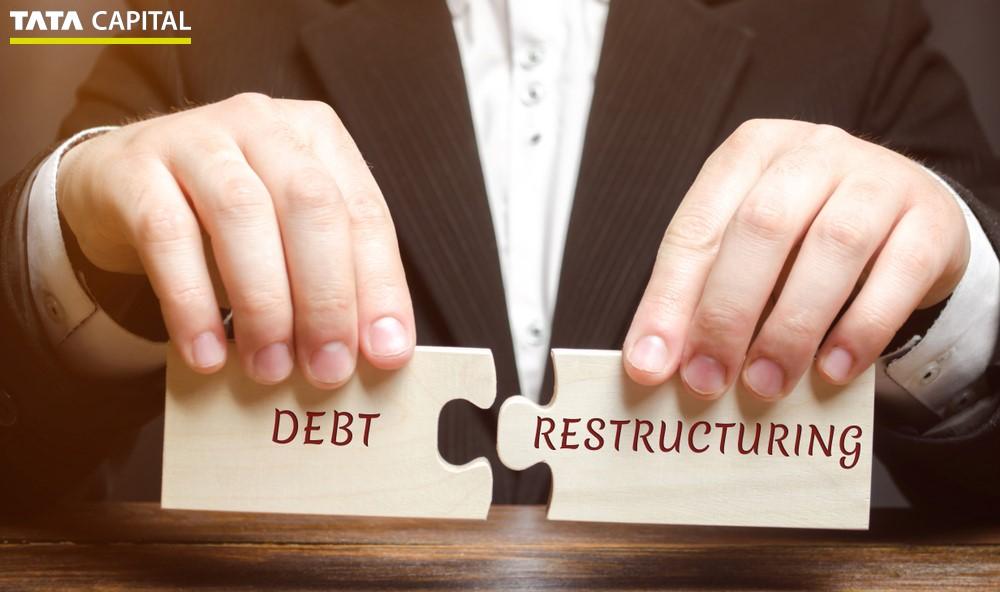
For borrowers struggling to service their debts, debt restructuring can be a lifesaver. In debt restructuring, the creditor consents to changes in the terms of your debt agreement so that your debt becomes more affordable.

The debt restructuring process can be undertaken through a modification of your loan repayment period, lowering the interest rate, etc. Whether you are a corporate entity or an individual repaying debt, it will be helpful to gain an understanding of how the debt restructuring process works, and which restructuring method is best for you.

What is Debt Restructuring?

Debt restructuring is an option used by firms, individuals, and sometimes even sovereign nations to avoid defaulting on a debt. Debt restructuring can be negotiated with the creditor, for example, by agreeing to a lower interest rate. Debt restructuring works to the benefit of both the lender and the borrower. When the borrower is in financial trouble and is unable to meet debt obligations with the present terms, restructuring of debt is a less expensive alternative, for both parties, compared to the prospect of bankruptcy.

Debt restructuring serves several vital purposes:

– It enables the implementation of a time-bound and transparent debt restructuring plan to aid borrowers facing financial distress.

– Minimizes the losses for the lenders and shareholders.

– Enables firms in distress by helping them stay afloat in the best interests of all the stakeholders – the firm, the creditors, and the shareholders.

How Debt Restructuring Works

The steps that you would need to initiate, together with your creditor, in the debt restructuring process include:

1. Contact the Lender:

Debt restructuring is essentially the lender’s response to a borrower finding it difficult to service debt. It is best that you contact your creditor as soon as you realize that you will not be able to meet the debt repayment schedule. This is better for your credit score. If you wait for the lender to contact you, it will be to your disadvantage since the creditor will contact you only after you have missed your payments and accrued penalties. This is also applicable in the case of debt restructuring for individuals.

2. Wait for a Response:

The lender is not obliged to come to your help and may insist on the original loan terms. If you are unable to make the repayments or the payments are delayed, the lender will report it to the credit bureaus. In cases of long-pending repayments, your debt account could be sent to collections, or the lender may decide to sue you.

3. Weigh the Alternatives:

If the lender agrees to provide either interim assistance to tide over temporary financial difficulties or a debt restructuring plan – carefully weigh the alternatives. In either of the above alternatives, the lender could offer many options – assess the impact of each option on you or your business before arriving at a decision. 

4. Negotiate:

Before agreeing to any new terms for debt repayment, negotiate your new contract to arrive at mutually agreeable terms.

5. Finalize New Terms:

Once the new terms have been agreed upon, formally sign the revised agreement with the revised terms. The revised terms then become binding on you for debt repayment.

Types of Debt Restructuring

There are various types of debt restructuring:

1. Debt Restructuring for Companies

When faced with financial strain, businesses have certain options to restructure debts. Debt-for-equity swap, for example, involves reduction in debt in exchange for partial equity or ownership in the company. This is favoured when the company still possesses profitable assets, and allows creditors to obtain stakes in the company.

Asking bondholders to accept reduced interest payments, or “take a haircut”, can also be an acceptable option. Callable bonds can allow companies to repay high-interest debt at lower rates when markets fall. These are helpful when the company cannot make interest payments. Issuing income bonds is another option, where only the principal borrowed amount is repaid. In case of profits, dividend payments can be added on top.

2. Debt Restructuring for Countries

When countries default on debt, restructuring methods can come in handy. This sovereign debt restructuring shifts debt from the private to the public sector, which can deal with the fallout better. Sovereign bondholders can “take a haircut”, or agree to extend the debt’s maturity timeline. This gives the government more time to repay the debt.

3. Debt Restructuring for Individuals

For people facing bankruptcy, renegotiation with lenders and tax authorities is the primary option. The terms of the debt can be changed in exchange for sharing future income. An example is home loan defaulting, where the mortgage may be reduced in exchange for sharing house sale proceeds in the future. Although this is a good option for debt relief, this field is fraught with scams. It is best to consider debt relief companies and their terms carefully.

Debt Restructuring Methods

The various alternatives available for implementing the debt restructuring plan include:

1. Debt-for-Equity Swap:

This is primarily meant for companies. In this debt restructuring process, lenders agree to liquidate a portion or all of the debt owed in exchange for equity/stake in the firm. This is a good option when the firm has significant assets and a large balance sheet, and it would be counterproductive to force the firm to shut down. It would instead benefit the lenders to take part ownership and control of the firm as a going concern.

2. Bondholder Haircut:

A business looking to restructure its debt can negotiate with its bondholders to agree to a ‘haircut’. A haircut implies that either a portion of the interest payments due will be written off or it will be agreed that the firm will not repay a portion of the balance.

3. Renegotiating the Terms for Repayment:

Another alternative that a distressed firm can consider is to renegotiate repayment terms. This could be through a reduction of the interest rate, waiving off some portion of the outstanding loans, or extending the repayment period.

4. Debt Consolidation:

In this method, you will be required to secure a new line of credit or a debt restructuring loan to clear your existing debts. The debt restructuring loan will usually have more favorable terms, such as a reduced interest rate.

5. Payment Deferment:

A debt restructuring plan through loan forbearance or payment deferment enables you to temporarily miss scheduled payments without having to pay a late fee or be reported to the credit rating agencies/bureaus. This is a good option in the case of debt restructuring for individuals. This is especially useful if you are not looking to change your loan repayment terms permanently but are only looking to tide over a short-term setback.

Debt Restructuring for Different Entities

You may come across different restructuring approaches depending on who needs support. Here’s how debt restructuring varies across entities: 

1. Businesses use corporate debt restructuring to adjust interest rates, extend tenures, or convert debt into equity when cash flow gets tight.

2. Individuals rely on personal loan restructuring to reduce EMIs or extend timelines during income drops or unexpected expenses.

3. Countries apply sovereign debt restructuring to negotiate longer repayment windows or lower interest burdens when national finances come under pressure.

Alternatives to Debt Restructuring

You may reach a point where restructuring is not the only option that fits your situation. Here are a few practical alternatives that can give you more flexibility: 

1. Debt Consolidation: You can combine multiple loans into one new credit line with a single EMI. Debt consolidation helps you simplify repayment and may offer better control over monthly outflow.

2. Loan Refinancing: You can switch your existing loan to a lender offering a lower rate or improved terms. Loan refinancing works well when your credit profile is strong enough to qualify for a better deal.

3. Forbearance: You can request temporary payment relief during a short-term financial setback. Forbearance pauses or reduces payments without creating a new loan and gives you time to stabilise your finances.

4. Debt Management Plan: You can work with credit counsellors to create a structured repayment plan. A debt management plan is a great bankruptcy alternative as it helps you negotiate manageable EMIs while staying committed to clearing your dues.

Benefits of Debt Restructuring

The chief purpose of undertaking debt restructuring is to save and sustain the business. It offers additional benefits for businesses and also allows debt restructuring for individuals.

The benefits of debt restructuring include:

– Either through deferment, reduction in instalments, or reduction in the interest rate, debt restructuring provides you with immediate cash for investments in future business plans.

– Legal protection for the business from creditors.

– Legal protection for the assets of the firm.

– Helps keep the company running as a going concern.

– Creditors realize better recovery compared to the firm going bankrupt. In the case of individual borrowers, a debt restructuring personal loan helps creditors achieve superior outcomes. 

Risks of Debt Restructuring

– Reduced recovery due to lowered interest payments and extended schedule.

– The creditor’s balance sheet may be negatively affected by write-offs.

– Even after debt restructuring, the business may fail and be unable to clear the debt.

Impact of Debt Restructuring on Credit Score

You may notice a change in your credit profile once your lender reports the revised repayment terms. The debt restructuring credit score impact usually appears as a short-term dip because the update signals that you needed modified terms to manage EMIs comfortably.

Over time, the loan restructuring effect on credit depends on how consistently you follow the new schedule. Timely payments after restructuring can help your score recover gradually. Missed or delayed EMIs can create further decline, so maintaining steady repayment becomes important after the terms are revised.

Conclusion

When managed well, debt restructuring can prove to be a win-win for both – the creditors and the borrowers. It can prove to be especially useful for startups and small businesses that are in the process of scaling up and growing the business.

Individuals faced with the prospect of insolvency can try and negotiate a debt restructuring personal loan with their creditors. Individuals can negotiate favorable terms personally or use the service of a reliable debt relief company.

Are you looking for funds for a debt restructuring loan and are falling short of your requirement? You can choose Personal Loan Restructuring from Tata Capital.

More About Loans

FAQs

What are three forms of restructuring?

Downsizing, downscoping, and leveraged buyouts are forms of restructuring strategies. Downsizing is a reduction in the number of employees, downscoping is elimination of under-performing business units, and leveraged buyouts are the purchase of a public company’s assets by a buyer.

What are restructuring techniques?

Some debt restructuring techniques include debt-for-equity swaps, debt consolidation, bondholder haircuts, callable bonds, income bonds, and renegotiation of repayment terms.

Can debt restructuring hurt your credit?

Debt restructuring might negatively impact your credit. The extent of impact depends on the type of debt restructuring you have chosen. For example, a debt settlement can markedly affect your credit.

What is balance sheet restructuring?

Balance sheet restructuring is an agreement where debt and equity holders follow concessions that make the balance sheet stronger. This can involve reducing the leverage a company has.

Can debt restructuring take two forms?

Debt restructuring can take multiple forms. These can include lowering interest rates on existing debt, or extending the loan maturity date to reduce monthly payments.

What is the difference between debt restructuring and debt consolidation?

The debt restructuring meaning refers to changing the terms of your existing loan when repayments become difficult. Debt consolidation replaces multiple loans with one new loan. Restructuring modifies your current agreement, while consolidation simplifies repayment through a single EMI.

Does debt restructuring affect my credit score?

Yes, debt restructuring can affect your credit score because lenders report the modified terms. The impact depends on the restructuring type and your repayment behaviour afterward. Knowing what is loan restructuring helps you understand how these changes influence future borrowing.

When should I consider debt restructuring?

You can consider debt restructuring when income drops or monthly expenses rise, making EMIs harder to manage. The process adjusts your loan terms so you can continue paying without missing instalments or risking default.

Can an individual restructure a personal loan?

Yes, individuals can restructure a personal loan by requesting revised terms such as a longer tenure, smaller EMIs, or temporary relief. Lenders approve restructuring based on your repayment capacity and the financial difficulty you’re currently facing.