Get the Tata Capital App to apply for Loans & manage your account. Download Now

Blogs

SUPPORT

Tata Capital > Blog > Loan for Home > Rajiv Awas Yojana: Objective, Eligibility And Benefits

Loan for Home

Rajiv Awas Yojana: Objective, Eligibility And Benefits

Rajiv Awas Yojana: Objective, Eligibility And Benefits

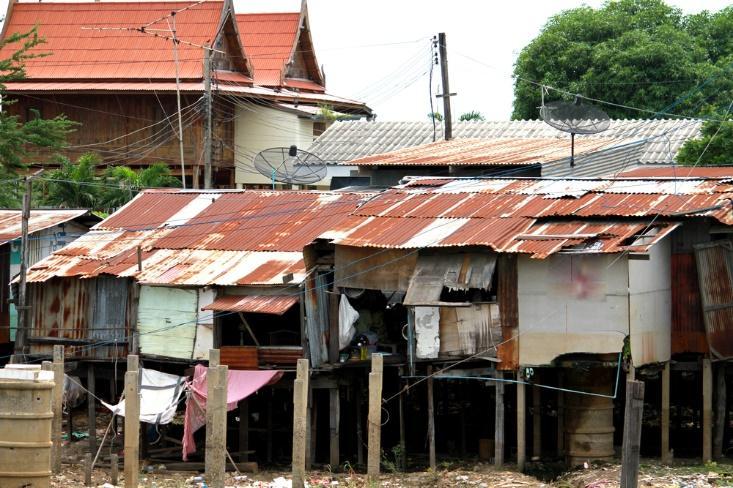
A vision, a ray of light to see India as a “Slum-free India”, a project under the Ministry of Housing and Urban Poverty Alleviation (MoHUA) was launched. 

In pursuance of this vision, this aspirational project was named Rajiv Awas Yojana or RAY, focusing on slum dwellers and the urban poor, commonly known as Rajiv Housing Scheme. It was launched in 2011 in two phases. The period from 2011- to 2013 was the preparatory stage.

After the approval of the Central Government, the implementation stage commenced, making India a slum-free country by 2022. 

Although the scheme is no longer operational, it played a significant role in shaping India’s affordable urban housing framework and has since been replaced by newer programmes such as the Pradhan Mantri Awas Yojana.

Objectives of RAY

The main aim/ mission of the Rajiv Awas Yojana scheme is to stimulate India’s states/union territories to bring all slums, notified or non-notified, under the umbrella of the formal system. 

All slums get pucca houses with basic and quality living amenities like housing, civic infrastructure, social amenities, etc., vis a vis other area in the State or the Union Territories of India. 

The following are the definitive objectives that RAY aimed to achieve:

  1. Providing basic and affordable housing facilities with all amenities in civic, infrastructure, and social arrangements to the slum areas to help curb the growth of slums.
  1. Facilitate the Urban poor with financial schemes and banking institutions to support them with affordable credit linkages.
  1. To create basic facilities like water supply, approach roads, drainage system, medical, sewerage, electricity, street lighting, etc. for the slum area
  1. To reform any bills that will help address the reasons for slum creation and its problems.
  1. To provide skill sets of the Urban poor by providing skill development reform programs to increase employability and income.
  1. Allowing equal participation at every decision-making stage empowers the slum dwellers by strengthening and nurturing Slum Dwellers Associations/ Federations, thus reducing the societal marginalisation.
  1. The Rajiv Awas Yojana for the slum dwellers will help in lifestyle upliftment and thus reduce the further increase in slums through the collaborative activities by the government and the Urban poor.

Also, read – Affordable Housing Eligibility in India: Schemes, Limits & Criteria

Eligibility for Rajiv Gandhi Awas Yojana Schemes:

The minimum size of the project should be two hundred and fifty urban dwellings to come under the scheme of Rajiv Awas Yojana. 

Rajiv Awas Yojana is categorised into the following categories based on the funding patterns. Different categories have different permission grants for their various activities, mainly based on government funding patterns. 

It is categorised into three parts- categories A, B, and C, which are the eligibility criteria.

  • Category A: it comprises people living in urban areas with a population of 5 lakh or more per Dwelling Unit (DU) and gets an upper limit funding of Rupees Five Lakh
  • Category B: it comprises people living in urban areas with a population below 5 lakh per Dwelling Unit (DU) and gets funding of Rupees Four Lakh
  • Category C: comprises people living in urban areas of special category states (like Jammu & Kashmir, Himachal Pradesh, and Uttrakhand) and the North-eastern States. It gets fixed funding of Rupees Five Lakh irrespective of the city’s population

Also, read – PMAY Gramin and PMAY Urban: How are they different?

The benefits of Rajiv Awas Yojana:

  1. This scheme provides financial grants to the Government agencies (States/ UTs, Urban Local Bodies / Central Government) to implement the Rajiv Awas Yojana scheme in their states/ Union territories.
  1. Under this scheme, financial aid is offered to create affordable housing complexes.
  1. Under the Affordable Housing in Partnership (AHP), the Centre government provides monetary aid of Rs. 75000 each for the Economically Weaker Section (EWS)/Low-income Group (LIG) for 21 to 40 sq. mt. Housing units.
  1. Rajiv Awas Yojana allows employment by providing skill development reforms/programs to uplift their standard of living.
  1. This helps get a better salary for people living in slums and will eventually reduce poverty.

Also, read – How to Fill PM Awas Yojana Form Online | Step-by-Step Guide

Key features and implementation of Rajiv Awas Yojana

The Rajiv Gandhi Awas Yojana cheme was designed to address urban housing shortages through a structured and inclusive framework. Under Rajiv Gandhi Awas Yojana, the focus was on long-term rehabilitation, legal security, and planned urban development. 

The key features and implementation approach included:

  • Preparation of slum-free city plans by urban local bodies to identify and prioritise slum areas
  • Preference for in-situ slum redevelopment to minimise displacement of existing residents
  • Construction of affordable housing units for eligible urban poor families
  • Provision of ownership or long-term lease rights to ensure housing security
  • Shared funding between the central government, state governments, and local authorities
  • Phased execution of projects based on city-specific needs and feasibility
  • Community participation during planning and implementation stages

Also, read – Affordable Housing in India: Know about the Measures Taken By RBI

Credit schemes under Rajiv Awas Yojana:

For the easy flow of credit from the banks and financial institutions to the slum dwellers for housing, few provisions were taken to improve access to credit for EWS/LIG. 

They are:

  • Rajiv Rinn Yojana (RRY) – this is an additional instrument scheme of Rajiv Awas Yojana for tackling the housing needs for the EWS/LIG community in the Urban sector. It provides an interest subsidy of 5% for any long-tenure loans of 15yrs to 20yrs. The revised loan amount is Rs. 5 lakhs for EWS and Rs. 8 lakhs for LIG beneficiaries. This helps in cheaper housing loan schemes for EWS and LIG urban dwellers.
  • Credit Risk Guarantee Fund – this fund is maintained and operated by National Housing Bank, which guarantees the lending agencies for the loans taken. It gives guaranteed coverage of up to 85% of the loan from Rs. 2 lakhs to Rs. 5 lakhs. And 90% coverage of the loan amount of up to Rs.2 lakh. 

Also, read – PMAY Benefits for Women: Incentives and Advantages Explained

Application process for Rajiv Gandhi Awas Yojana Scheme

For beneficiaries, the Rajiv Gandhi Awas Yojana Scheme followed a guided application process through local government bodies. Individual applicants did not apply directly online; instead, participation under Rajiv Gandhi Awas Yojana was facilitated at the municipal level.

  • Check eligibility: Confirm that you are an urban slum resident and meet income and residence criteria set by local authorities.
  • Contact local office: Visit your municipal corporation or urban local body office handling the Rajiv Gandhi Awas Yojana scheme9.
  • Participate in slum survey: Ensure your household details are included during the official slum and socio-economic survey.
  • Submit required documents: Provide Aadhaar, identity proof, income certificate, and proof of residence when asked.
  • Verification by authorities: Local officials verify documents and household details for eligibility.
  • Inclusion in beneficiary list: Eligible applicants are added to the approved beneficiary list for housing allocation.
  • Project selection: Housing is provided through in-situ redevelopment, new construction, or relocation, based on project plans.
  • Allotment notification: Beneficiaries receive official communication regarding house allotment and possession timelines.
  • Possession of house: After construction is completed, the dwelling unit is handed over to the beneficiary.

Also, read – Home Loan Options For Low Income

Important documents required for Rajiv Gandhi Awas Yojana

To be considered eligible under the Rajiv Gandhi Awas Yojana Scheme, beneficiaries are required to submit specific documents during verification by local authorities. Under Rajiv Gandhi Awas Yojana, these documents helped confirm identity, income status, and residential eligibility. 

The commonly required documents included:

  • Aadhaar card or any valid government-issued identity proof
  • Proof of residence showing stay in the identified slum area
  • Income certificate issued by a competent authority
  • BPL card or relevant economic category proof, if applicable
  • Ration card or voter ID for address verification
  • Passport-size photographs of the applicant
  • Affidavit or declaration as prescribed by the urban local body

Document requirements could vary slightly based on state or municipal guidelines.

Rajiv Awas Yojana was introduced in 2011 to help slum dwellers, and urban poor provide affordable housing and a living environment with the strong aim of eradicating slums. 

This envisions of slum-free India is for the betterment of the slum dwellers and is now known as Pradhan Mantri Awas Yojana.

More About Loans

FAQs

What is Rajiv Gandhi Awas Yojana and how does it work?

The Rajiv Gandhi Awas Yojana Scheme aimed to make cities slum-free by providing affordable housing to urban poor households. Rajiv Gandhi Awas Yojana worked through slum surveys, beneficiary identification, and government-led housing development projects.

Who is eligible for Rajiv Awas Yojana scheme benefits?


Under the Rajiv Gandhi Awas Yojana Scheme, eligibility mainly included urban slum dwellers from economically weaker sections, identified through municipal surveys. Beneficiaries typically lacked formal housing and met income and residence criteria set under Rajiv Gandhi Awas Yojana.

How do I apply for Rajiv Gandhi Awas Yojana housing?


There is no direct online application under the Rajiv Gandhi Awas Yojana Scheme. Beneficiaries were identified through slum surveys conducted by urban local bodies under Rajiv Gandhi Awas Yojana, followed by document verification and inclusion in approved housing projects.

What documents are needed to apply for the Rajiv Gandhi Awas Yojana scheme?


Documents under the Rajiv Gandhi Awas Yojana Scheme generally include Aadhaar or ID proof, income certificate, proof of residence, ration card or voter ID, and photographs. Requirements could vary slightly by state under Rajiv Gandhi Awas Yojana.

Can I apply for Rajiv Gandhi Awas Yojana if I already own a house?


No. The Rajiv Gandhi Awas Yojana Scheme is meant for houseless urban poor families. Individuals already owning a pucca house were usually not eligible for benefits under Rajiv Gandhi Awas Yojana.