Get the Tata Capital App to apply for Loans & manage your account. Download Now

Blogs

SUPPORT

Tata Capital > Blog > Loan for Business > The 5 C’s of credit: How lenders assess a business loan

Loan for Business

The 5 C’s of credit: How lenders assess a business loan

The 5 C’s of credit: How lenders assess a business loan

The 5 C’s of credit are the key factors lenders use to assess a business loan application and measure credit risk. They evaluate your repayment history, repayment ability, financial contribution, available collateral, and overall business conditions before making a lending decision. Understanding these factors can help you prepare a stronger loan application and improve your chances of approval. By strengthening your credit profile and financial position, you may also qualify for a higher loan amount and better interest rates.

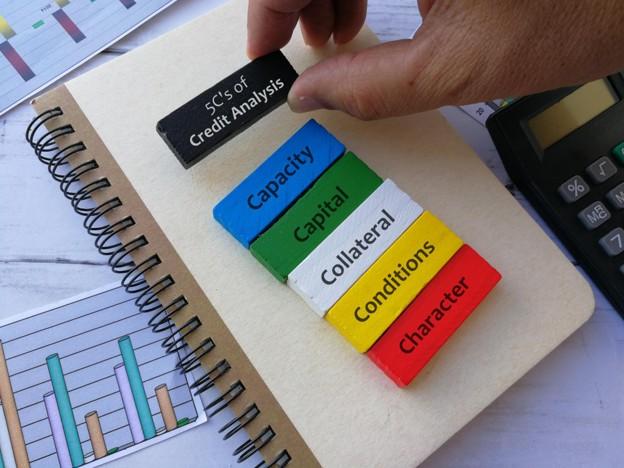
The 5 C’s of credit are five key factors – Character, Capacity, Capital, Collateral, and Conditions – that lenders use to evaluate a borrower’s creditworthiness before approving a business loan.

Every year, thousands of businesses in India apply for loans to expand operations, purchase equipment, or manage working capital. Yet, many of these applications are turned down. While the exact number varies across lenders and sectors, industry reports consistently show that a significant share of business loan applications do not receive approval because they fail to meet lenders’ credit assessment standards. Many business owners are left wondering why their applications were rejected, even when their businesses appear to be doing well.

The reason is that lenders follow a structured method to evaluate every borrower before approving a loan. This method is commonly known as the 5 C’s of credit or the 5 C’s of lending. These five factors – Character, Capacity, Capital, Collateral, and Conditions – help lenders judge a business’s ability to repay a loan and the level of risk involved. In this article, we’ll explain each of these five factors, understand how they influence loan approval and interest rates, and explore practical ways to strengthen your credit profile before applying for a business loan.

What are the 5 C’s of credit?

The 5 C’s of credit are five important factors that lenders use to evaluate a borrower’s creditworthiness before approving a loan. These factors are Character, Capacity, Capital, Collateral, and Conditions. Together, they help the lender understand how likely a borrower is to repay the loan on time and assess the overall credit risk.

In simple terms, the 5C of credit allows a lender to estimate the chances of default and the possibility of a financial loss on the loan. However, no single factor decides the final outcome. A strong profile in one area may sometimes balance a weaker area, depending on the lender’s assessment and the overall strength of the loan application.


Also Read – Role of Balance Sheets in Getting a Business Loan

What is credit risk?

Simply put, credit risk is the possibility that a borrower may fail to repay a loan, either partially or completely, resulting in a financial loss for the lender. So, if you are wondering what is credit risk, it refers to the risk of default on a loan. To reduce this risk, lenders evaluate borrowers using the 5 C’s of credit, which help them assess repayment ability, financial stability, and the overall likelihood of recovering the loan amount on time.

Character

The first C of the 5 C’s of lending is “Character”. It reflects how trustworthy or reliable a borrower is. Most lenders consider this C as the most important of the 5 C’s when reviewing loan applications. It’s because a borrower’s ‘Character’ reveals their creditworthiness.

Lenders review a borrower’s credit report, repayment history, and credit score to understand their character. A high credit score (preferably above 700) and a clean repayment history give lenders confidence that the borrower will repay the loan on time. Thus, they increase the chances of loan approval. Similarly, a low credit score and a history of missed EMIs create doubt and are among the most common reasons behind business loan rejections.

How to strengthen: Pay your EMIs and credit card bills on time to maintain a healthy CIBIL score. Avoid loan defaults.

Capacity

The second C stands for “Capacity”. It refers to the borrower’s ability to repay the loan on time. It helps a lender assess whether a business is generating sufficient income for the borrower to comfortably service loan EMIs over time.

To determine a borrower’s “Capacity”, lenders review their business income, operating expenses, and existing debt obligations. Financial ratios, such as the Debt-to-Income (DTI) ratio and the Debt Service Coverage Ratio (DSCR), help lenders in this aspect. A lower DTI reflects a healthy balance between monthly debt and gross income, thus improving the chances of loan approval.

How to strengthen: Reducing your existing debt and/or improving your business cash flow can help you strengthen your DTI ratio.

Capital

The third C stands for “Capital”. It represents the borrower’s own financial stakes in the business. If someone has invested a reasonable amount of their own capital, lenders see it as a sign of commitment towards the business. This, in turn, increases the chances of loan approval.

Lenders usually analyze an owner’s business equity, savings, retained earnings, investments, and other assets to evaluate “Capital”. Owners with at least 25% to 30% business equity typically find loan approval easier than those with heavily leveraged ventures. It can also help them secure better business loan interest rates.

How to strengthen: Build adequate business reserves, reinvest profits into your business, and clearly demonstrate your own financial contribution when applying for a loan.

Collateral

The fourth C stands for “Collateral”. It refers to the asset(s) a borrower pledges as security for a loan. These assets may include property, machinery, equipment, inventory, vehicles, or even business receivables. If the borrower fails to repay the loan, the lender has the legal right to recover the outstanding amount by selling the pledged asset. This reduces the lender’s risk and often improves the borrower’s chances of loan approval.

Loans that involve collateral are known as secured loans. They are generally considered less risky for lenders to issue. They also offer lower interest rates than unsecured loans (loans that do not require collateral) and can help borrowers qualify for larger loan amounts.

How to strengthen: Offer a valuable, clear, and legally verifiable collateral for easy verification. Keep ownership documents ready.


Also Read – Business loan CIBIL score: Minimum eligibility criteria

Conditions

The fifth and last C stands for “Conditions”. These are the external and loan-specific factors that may influence a lender’s decision. For example, a lender may look at why someone needs a loan, how much they want to borrow, the applicable interest rate, and the repayment term. They may also consider broader factors, such as the current economic environment, industry trends, market conditions, and government policies, that may affect the business.

Unlike the remaining of the 5 C’s of credit, these factors are often beyond the borrower’s direct control. For instance, lenders may become more cautious during an economic slowdown or when a particular industry is facing challenges.

How to strengthen: Apply when business and market conditions are favorable, and choose an appropriate loan product.

How do the 5 C’s work together in a business loan decision?

Lenders do not evaluate a single factor when deciding on business loan approvals. Instead, they analyze the 5C of credit together to get a complete picture of the borrower’s creditworthiness. For example, a business with limited collateral may still qualify for a loan if it has a strong repayment capacity, healthy cash flow, and an excellent credit history. Similarly, a borrower with significant assets but weak repayment ability may still face difficulties in getting approved.

The combined assessment of the 5 C’s helps lenders understand what is credit risk in a loan application. Based on this, they decide whether to approve a loan, how much to lend, and what the interest rate would be.

5 C’sWhy it MattersHow is it Assessed
CharacterReflects the borrower’s creditworthiness.CIBIL score and repayment history.
CapacityShows the borrower’s ability to repay the loan on time.DTI and DSCR
CapitalRepresents the borrower’s financial stakes in the business.Equity, savings, retained earnings, investments, assets
CollateralRefers to the asset(s) pledged by the borrower for a loan.Property, machinery, inventory, vehicles, receivables
ConditionsThese are external factors that may influence a lender’s decision.Loan amount, interest rate, economic environment, industry trends

How to improve your 5 C’s before applying for a business loan?

Improving the 5 C’s of credit before applying for a business loan can significantly increase your chances of approval and may even help you secure a better interest rate. Here are a few practical steps you can take:

  • Maintain a healthy CIBIL score. Pay all your loan EMIs and credit card bills on time.
  • Keep your business cash flow strong and maintain proper financial records.
  • Reduce your existing debt. This helps in improving your repayment capacity.
  • Build adequate capital reserves. Reinvest profits. Maintain sufficient business savings.
  • Offer valuable collateral. Keep ownership documents updated.
  • Prepare a detailed business plan. Explain how you plan to use the loan amount.
  • Apply for an appropriate loan amount. Avoid overborrowing or underborrowing.

If you are looking for a hassle-free financing solution, you can explore Tata Capital Business Loans. We offer flexible loan options and a simple application process for eligible businesses.

Conclusion

The 5 C’s of credit – Character, Capacity, Capital, Collateral, and Conditions – form the foundation of how lenders evaluate a business loan application and manage credit risk. While no single factor guarantees approval, strengthening these areas can improve your chances of getting the loan amount you need at favorable terms. If you are planning to apply for financing, you can check your eligibility for a Tata Capital Business Loan and explore loan options that suit your business requirements.

More About Loans

FAQs

What are the 5 C's of credit?

The 5 C's of credit are the five key factors lenders use to evaluate a loan application. They are Character, Capacity, Capital, Collateral, and Conditions. Together, these factors help the lender understand how reliable the borrower is, whether the loan can be repaid on time, and how much risk is involved before approving a business loan.

Which of the 5 C's of credit is most important?

There is no single most important C because lenders look at all five together. However, many lenders give extra attention to Capacity, as it shows whether the borrower has enough income or cash flow to repay the loan. A strong profile in one area can sometimes balance a weaker profile in another.

What is credit risk in lending?

Credit risk is the possibility that a borrower may fail to repay the loan as agreed. If that happens, the lender may suffer a financial loss. To reduce this risk, lenders carefully assess the borrower's financial position, repayment ability, and the 5 C's of credit before making a lending decision.

How do lenders use the 5 C's to assess a business loan?

Lenders review all five C's together instead of relying on just one factor. They examine the borrower’s credit history, cash flow, investment in the business, available collateral, and current economic conditions. Based on this assessment, they decide whether to approve a loan, how much to lend, and what the interest rate would be.

What is the difference between capacity and capital?

Capacity refers to the borrower’s ability to repay the loan from their business income or cash flow. Capital, on the other hand, refers to the money or assets they have invested in their business. In simple terms, capacity shows their repayment strength, while capital shows their financial commitment to the business.

How can I improve my 5 C's of credit?

You can strengthen your profile by paying existing loans on time, maintaining a good CIBIL score, improving business cash flow, reducing unnecessary debt, building business savings, organizing collateral documents, and preparing a clear business plan. These steps can improve your chances of getting a business loan on better terms.

Are the 5 C's the same for secured and unsecured loans?

Yes, lenders generally consider the same 5 C's for both secured and unsecured loans. The main difference is that Collateral plays a much bigger role in secured loans because an asset is pledged as security. For unsecured loans, lenders rely more on factors such as character, capacity, and capital.