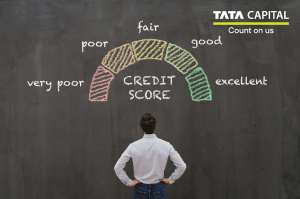
Lenders check your CIBIL score to understand your credit health. The score is calculated based on your past loan and credit card payments. Performing a CIBIL score check yourself before applying for a loan helps you assess your chances of loan approval. If your credit score is low, you must first work towards improving it. You can do a credit score check online for free on the official CIBIL website or other third-party aggregator websites. Checking your CIBIL score yourself is a soft inquiry and doesn’t impact your credit score.
If you want to know how to check your CIBIL score, visit the official CIBIL website. The process is easy and requires you to enter your name, email, mobile number, and PAN Card details.
Are you considering applying for a personal loan? If so, you’re about to embark on a financial journey, and here’s a crucial aspect you should be well-prepared for – your CIBIL score.
In this article, we’ll walk you through the process of checking your CIBIL score before you apply for a personal loan. Personal loans, being unsecured, often require lenders to assess your creditworthiness more closely. They want to ensure that lending you money is a reasonably safe bet. This is where your CIBIL score comes into play.
What is a CIBIL score and why does it matter for personal loans?
CIBIL score is a three-digit number, and it can range from 300 to 900. Think of it as a numerical representation of your financial behavior. This score is like your financial report card, and it’s used by lenders to gauge your creditworthiness. The higher your score, the better your financial reputation appears to potential lenders.
How is it calculated?
The calculation of your CIBIL score depends on the following factors:
- Payment history (35%)
Your repayment record has the biggest impact on your CIBIL score. Paying EMIs and credit card bills on time helps improve your score. On the other hand, missed or late payments can lower it.
- Credit utilization (30%)
This shows how much of your available credit you are using. Keeping credit card usage low, preferably below 30% of the limit, can support a healthy score.
- Credit age (15%)
Credit rating agencies also consider how long you have been using credit. A longer credit history with responsible repayment generally helps build a stronger CIBIL score.
- Credit mix and new credit (20%)
It can be helpful to have a balanced mix of secured and unsecured loans. However, applying for several new loans or credit cards within a short period may negatively affect your score.
Also, read – Experian Score vs CIBIL Score
What are authorized credit rating agencies?
In India, there are four authorized credit rating agencies or bureaus designated by the Reserve Bank of India (RBI) to issue credit ratings. These agencies are the following: Credit Information Bureau (India) Limited (CIBIL), which is the one you’ve probably heard of the most, and it’s often synonymous with “credit score” in India; CRIF Highmark; Equifax; and Experian.
All of these agencies provide credit scores, and they’re equally valid. However, for the sake of simplicity, we’ll mainly use the terms ‘CIBIL Score’ and ‘Credit Score’ interchangeably in this article, as the CIBIL score is the most widely recognized and utilized across the country.
What is the CIBIL score range for personal loan eligibility?
Your CIBIL score neatly categorizes your credit rating, allowing lenders to quickly assess your financial responsibility.
CIBIL score range explained for personal loan approval (300-900)
- 550 and below (Bad): A score in this range indicates a low level of creditworthiness.
- 550–649 (Poor): Scores in this category suggest that your credit history might need some improvement.
- 650–699 (Average): An average score, which can be enhanced to secure better loan terms.
- 700–749 (Good): A good score that can open doors to favorable loan conditions.
- 750–900 (Excellent): The best range to be in; lenders view this score as a strong indicator of your financial responsibility.
What is the importance of CIBIL score for personal loan approval?
The importance of your CIBIL score lies in its role as a measure of your creditworthiness. When you apply for a personal loan or any other form of credit, lenders examine this score closely. A higher CIBIL score signals responsible financial behavior, making you a more trustworthy borrower.
The benefits of a good CIBIL score are substantial. It can lead to better loan terms, lower interest rates, and higher credit card limits. Essentially, it’s your financial reputation, and it can open doors to financial opportunities that might otherwise be challenging to access.
Therefore, understanding your CIBIL score is not just advisable; it’s crucial for anyone seeking financial stability and success.
Here’s how your CIBIL score matters for personal loan approval:
- Lower interest rates: A high CIBIL score shows that you are a responsible borrower. Lenders may consider you a lower-risk applicant and offer a personal loan at a lower interest rate.
- Faster loan approvals: A good CIBIL score can make your application easier to assess. As a result, lenders may approve your loan faster when your credit history shows timely repayments.
- Higher credit limits: A strong credit score can improve your chances of getting a higher personal loan amount, depending on your income, repayment capacity, and other eligibility factors.
- Negotiation power: A high CIBIL score may give you more room to negotiate better loan terms, such as a lower interest rate, higher loan amount, or flexible repayment options.
Also, read – What Does a 777 Credit Score Mean?
What are the factors affecting your CIBIL score for personal loan eligibility?
Many factors affect your CIBIL score for personal loan eligibility. They can increase or decrease your credit score. Hence, it is advisable to be mindful of the same.
1. Repayment history
First and foremost, your payment history carries considerable weight. Timely payments positively impact your score, while missed or late payments can harm it.
2. Credit utilization ratio
Managing your credit utilization is equally vital. Keeping it below 30% of your total credit limit can have a positive influence.
3. Length of credit history
The length of your credit history is another factor. A longer credit history is generally viewed favorably by lenders.
4. Credit mix
A diverse mix of credit types, like credit cards, installment loans, and retail accounts, can show responsible financial behavior.
5. New credit inquiries
Applying for several loans or credit cards in a short period can result in multiple hard inquiries. These inquiries may lower your CIBIL score and make lenders cautious.
6. Errors in your credit report
If there is any incorrect information in your credit report, it can affect your CIBIL score. Check your report regularly and raise a dispute to correct genuine errors. These errors include wrongly reported outstanding loans or late payments.
How to improve CIBIL score before applying for a loan?
The different ways you can improve your CIBIL score before applying for a loan are as follows:
- Pay EMIs on time
Clear all loan EMIs and credit card bills before their due dates to build a positive repayment record.
- Keep credit utilization low
Each borrower is granted a credit limit. Try to use only a small portion of it. High usage can affect your score negatively.
- Clear outstanding dues
Make sure you pay all overdue amounts and avoid carrying unpaid balances for long periods.
- Avoid multiple applications
Do not apply for several loans or credit cards at once. Frequent inquiries may affect your score.
- Check your credit report
Review your CIBIL report for errors and raise disputes for incorrect information.
- Maintain old accounts
Keep well-managed older credit accounts active when possible, as they contribute to your credit history.
Also, read – 800-Plus Credit Score
What are the documents required to check your CIBIL score?
The documents needed for checking credit scores depend on where you check it. However, in most cases, the following documents for checking the CIBIL score are needed:
- PAN Card: One of the most critical CIBIL check requirements is your PAN Card. It is a unique identifier that connects all your credit activity across different institutions.
- ID proofs: Other CIBIL score documents include your ID (such as Aadhaar, passport, voter ID, or driving license) to help verify your personal details.
- Address proof: Sometimes, proof of address may also be needed. These could include a utility bill or a rent agreement.
- Full name: You will need to enter your name exactly as it appears on the PAN card. Make sure there are no errors in the spelling.
- Date of birth: This is also an important detail to verify your identity.
- Registered mobile number: Your mobile number is required for OTP verification.
- Email address: This will be used for further communication with you.
How to check your CIBIL score online (Step-by-step guide)?
Here’s how to check your CIBIL score step-by-step:
- Visit the CIBIL website
Visit the official CIBIL website to check your score. Other credit bureaus also offer a free CIBIL score online.
- Provide the relevant documents
The next step of the online CIBIL check process is to enter your details. This usually includes your name, phone number, email address, PAN Card, and other ID proofs.
- Fill in the OTP
To check your CIBIL score online, enter the OTP you receive on your registered number. Your CIBIL score and report will then be visible.
You can check your CIBIL score on Tata Capital’s website today!
How to check CIBIL score offline?
While an offline CIBIL score check is less common, it can be done. Here’s how to check CIBIL score for a personal loan offline:
- Download the form: Visit the official CIBIL website and download the request form required to check your credit score offline.
- Fill in the form: Attach your personal details.
- Attach your Demand Draft: For the CIBIL score offline method, a demand draft in favor of TransUnion CIBIL is also required. The prices are Rs. 550 for the score and report together, or Rs. 164 for only the report. Send the request to CIBIL’s address listed on the CIBIL website to access your CIBIL score by mail.
What are the common errors to avoid when checking your CIBIL score?
While checking your credit report, there are some tips to avoid CIBIL score errors. Below are some vital credit score checking tips to keep in mind:
- Ignoring the full report
Do not check only your CIBIL score. Review the complete report to identify incorrect accounts, payment details, or other errors.
- Infrequent reviews
Check your credit report regularly. This helps you spot mistakes or suspicious activity early and take corrective action.
- Duplicate loan accounts
Sometimes, your credit report may show the same loan more than once. If that’s the case, report duplicate entries to CIBIL for correction.
- Incorrect account status
Check whether closed loans are correctly marked as closed. An incorrect status can negatively affect your credit profile.
- Personal data mismatches
Verify your name, date of birth, address, and other personal details. Incorrect information can create problems in your credit report.
- Payment discrepancies
Make sure your repayment history is accurate. If there are any wrongly marked late or missed payments, report it immediately.
- Unauthorized inquiries
Check for loan or credit card inquiries you did not make. Unfamiliar inquiries could indicate incorrect reporting or possible misuse of your details.
Conclusion
If you’re considering a personal loan or want to explore your financial options, now is the perfect time to check your CIBIL score. Armed with this information, you can confidently take the next steps in your financial journey.
Remember that your CIBIL score is not static; it can change over time. By maintaining positive financial habits, you can continuously work towards improving your score, ensuring access to better financial opportunities in the future.
If you’re ready to explore personal loans with favorable terms, we invite you to consider Tata Capital. Tata Capital’s team will assist you in making informed financial decisions and guiding you towards a brighter financial future.
FAQs
The ideal CIBIL score range for personal loans typically falls between 300 and 900, with higher scores being more favourable for securing loans on better terms.
It’s a good practice to check your CIBIL score at least once a year. Additionally, it’s wise to check your score before applying for a significant credit product, such as a personal loan or a mortgage.
While it’s still possible to secure a personal loan with a lower CIBIL score, it may be more challenging, and the terms offered might not be as favourable. Lenders may charge higher interest rates or offer lower loan amounts to mitigate the perceived risk.
No, checking your own CIBIL score, also known as a soft inquiry, does not impact your score. It’s considered a responsible financial practice to monitor your score regularly.
If you find discrepancies in your report, log in to the CIBIL website and dispute it online. This can be done by submitting the incorrect details and attaching any relevant proof. CIBIL will then take the steps to verify the problem with the lender.
Apart from your CIBIL score, lenders also often consider other factors. These iclude your monthly income, your form of employment, your banking history, any existing debts, and repayment capacity. Along with your credit score, these factors allow lenders to evaluate whether you will be able to repay the loan amount.
Even if you don’t have a credit card or a loan, here’s how to check your CIBIL score for a personal loan. Make an account on CIBIL's website and provide the relevant information and documents. However, the score may be marked as -1 or NH, indicating no credit history.
To check your CIBIL score for a personal loan for free, visit the official CIBIL website and choose the option for a free CIBIL score and report. Other credit bureaus and lenders also allow you to check your CIBIL score for free. Borrowers can visit any website or mobile app to check.
When checking CIBIL score without a PAN card, you will need to provide other documents and ID proofs. These could include your Aadhaar card, passport, driver’s license, or even your voter ID. However, your PAN card is vital in most cases.
When checking your CIBIL score for personal loans, if you notice errors in your CIBIL credit score or report, you can report them immediately. This can be done through CIBIL’s online portal or website. CIBIL will then register this as a dispute and help you in solving the issue.





 02 September 2026
 10 mins read

 Previous Post