A payday loan is meant for people who need a small amount of money for a short period. It can help cover urgent expenses when other borrowing options may not be available. These loans usually have a simple application process, minimal paperwork and no need for collateral. However, interest and other charges can be high, so it is important to check the total repayment amount and make sure you can repay the loan on time.
A payday loan is a short-term, unsecured loan that provides quick access to funds and is typically repaid in a lump sum within a short period.
Payday loan meaning is a short-term, high-interest loan designed to help individuals cover urgent expenses, featuring quick processing, minimal documentation, and lump sum repayment. These loans may be provided to loan applicants who fail to get a personal loan due to having a low credit score. As the risk is high, payday loans tend to have high-interest rates. The repayment tenures on these loans range from 7 days to 60 days.
Financial emergencies tend to come out of the blue, catching you by surprise. You might need urgent funds to tide you over in such an event. In this case, you may consider a payday loan. Bridging your end-of-month cash crunch gets easier when you get a payday loan. Here is what you need to know about what is a payday loan and how it works in India, as well as how to apply for a payday loan.
What are the key features of a payday loan?
Payday loans are different from regular personal loans. Here are the primary features that define them:
Short-term: Payday loans are typically given for short tenures. They are usually repaid within two months or 60 days.
Unsecured: These loans are unsecured. It means that the borrower is not required to pledge any collateral to qualify for financing.
Instant approval: Payday loans are generally approved instantly or within a few minutes. Borrowers won’t have to wait for long during a financial emergency.
High interest rate: Since these loans are unsecured and are given without detailed verification checks, interest rates are comparatively higher than other loans.
How does a payday loan work in India?
To understand what is a payday loan better, here is what you need to know about the working of payday loans in India:
1. Approval based on your salary
The amount you receive from a payday loan is dependent on your current salary, which is why it is considered a payday advance. Lenders typically sanction a small amount, usually a portion of your monthly take-home pay rather than a multiple of it, since the entire loan must be repaid from a single salary credit. To verify your repayment capacity, the lender reviews your latest salary slips or bank statements that show regular salary deposits. The repayment date is then aligned with your next payday, so the loan amount, your verified income, and the repayment timeline are all tied to a single salary cycle.
2. Short tenures
Payday loans have short repayment tenures ranging from seven to 60 days. Some lenders may offer payday loans with repayment tenures of up to 3 months (90 days). The loan usually has to be repaid by the borrower’s next payday or the date of receipt of some other form of income, such as a pension. Hence, these are like payday advances.
3. Method of disbursal
You may receive your payday loan via a prepaid credit card, cash, or a cheque that gets electronically deposited into your bank account.
4. Easy online application process
It is very easy to apply for payday loans online. There is minimal documentation, such as providing proof of identity and address as well as your most recent salary slip/bank statement.
5. Instant payday loan approval
Lenders often advertise for instant payday loans that you can avail of through their websites and mobile apps. They are called instant payday loans, as the time taken for disbursal is very short.
6. Extension of a credit line
In some cases, the working of payday loans may be that the lender may offer you a credit line in place of a term loan. So, the lender will grant a certain amount of credit to you; you can withdraw however much you require from that amount as and when required. You can close the credit line at any time. Otherwise, the credit line gets replenished every time you make a repayment.
The cost of a payday loan is where borrowers need the most caution. These loans are unsecured, sanctioned within hours, and often given without credit checks, lenders price them far above regular credit products. Four things define what you actually pay:
High Interest Rates: Payday loans carry much higher interest rates than standard personal loans, making them an expensive borrowing option.
Upfront Fees: Processing fees or other charges increase the total cost of the loan beyond the quoted interest rate.
Risk-Based Pricing: Since these loans are unsecured and often require minimal checks, lenders charge higher rates to offset the risk.
Risk of Financial Strain: Missing the repayment deadline can lead to high penalty charges, significantly increasing the total amount owed.
Although the exact rates and charges may vary from one lender to another, the table below shows the generic payday loan interest rates and charges in India:
Charge
Meaning
Generic Range
Interest rate
The basic interest rate charged on the loan amount.
14% to 20% per annum
Processing fee
Charged by the lender to cover expenses incurred during the loan processing.
1% to 3% of the loan amount
Late fee
Charged as a flat fee if you fail to pay your EMI on time.
Rs. 200 to Rs. 500
Daily penalty
Additional penal interest charged on the outstanding EMI amount.
0.03% to 0.10% per day
GST
Goods and Services Tax (GST) is charged on applicable services.
5%, 12%, or 18% (depending on the slab)
It’s important to account for all these charges together when determining the borrowing cost. Considering only the interest rate can be misleading. For example, if the interest rate is 7.5% per annum but the total costs are around 0.3% daily, it means around a 9% monthly cost.
What are the hidden charges in payday loans?
Payday loans may appear affordable at first, but additional fees can quickly increase the overall borrowing cost. Before accepting an offer, check the complete fee structure and repayment terms.
Processing fee: A charge deducted when the loan is processed.
Late payment fee: Applied when repayment is missed or delayed.
Penalty interest: Additional interest may apply on overdue amounts.
Loan extension fee: Charged if you extend the repayment period.
Convenience or service charges: Some lenders may add charges for specific services or payment methods.
GST and other taxes: Applicable taxes can increase the final amount payable.
Payday loan eligibility criteria in India: Who can apply?
Payday loans feature easy accessibility to a wide range of borrowers, albeit they meet the eligibility requirements regarding residency, age, income, and banking. Here is a generic checklist for applicants:
Citizenship: The applicant must be a resident of India.
Age: The applicant must be aged between 21 and 58 years.
Existing account holder: These loans are usually offered to existing account holders with the lender.
Profession: Both salaried and self-employed individuals/business owners can apply.
No credit checks
There is no credit check done for payday loans. This is why someone who does not get approval for a personal loan may still get approved for a payday loan.
What documents are needed for a payday loan application?
Wondering what documents I need for a payday loan? Most lenders have a list of essential payday loan documents. They are used to verify identity, address, and income. These typically include:
Valid proof of identity: PAN card, Aadhaar card, passport, driving license, or voter ID card.
Proof of current address: Aadhaar card, utility bills, ration card, or passport.
Proof of age: Birth certificate or any government ID mentioning the age or date of birth.
Proof of income: Salary slips, employer offer letter, or income tax returns.
Bank proof: Latest bank statements and/or a canceled cheque.
Passport-sized photos
This list may vary depending on your specific lender. Regardless, having these documents ready for a payday loan will make the application process a lot faster and frictionless.
How to apply for a payday loan online in India?
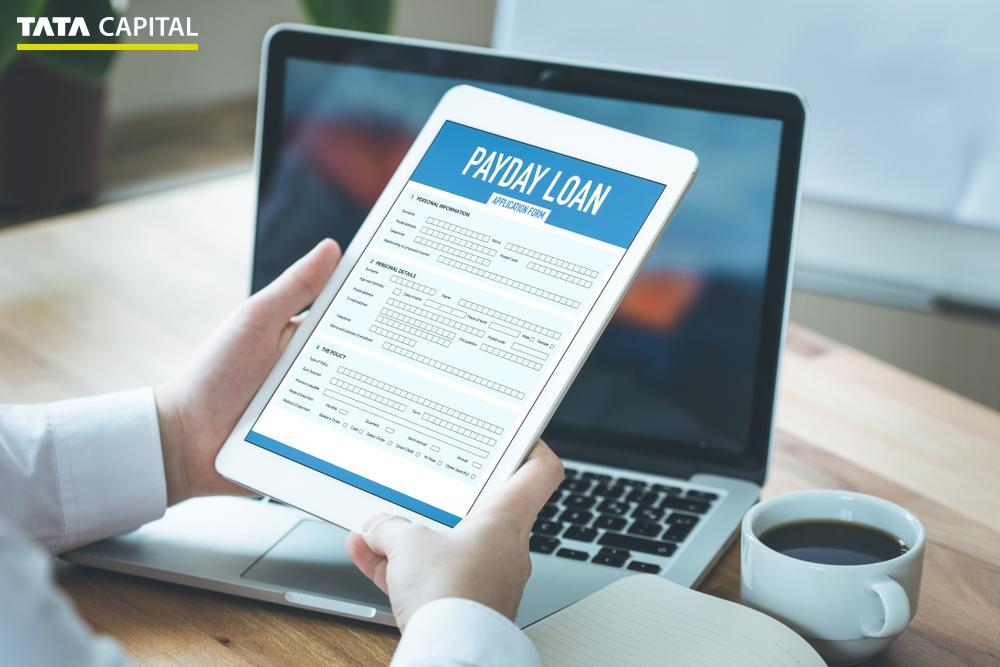
You can apply for payday loans online. Most lenders who offer this facility allow you to apply for payday loans online through their official websites or apps. Usually, there is a quick payday loan process for online applications, which is as follows—enter your details on the app on the payday loan application form and then upload any documents that are asked for by the lender. You will be asked to authenticate the agreement via a One-Time Password (OTP), and then you have to just wait for the approval and for the amount to enter into your bank account.
Once the lender approves your application, the funds will be disbursed into your registered bank account in a short amount of time. It could be as quick as less than half an hour. Providing all the correct details and documents ensures a quick payday loan process.
If you do not prefer to apply for payday loans online, you could also apply for one at a branch of the financial institution of your choice.
Below is the step-by-Step application process:
Step 1 – Choose a lender: Compare lenders on interest rates, fees, and repayment terms, and check their background and credibility before proceeding. Stick to established platforms with transparent charge disclosures.
Step 2 – Register & create a profile: Sign up on the lender’s website or mobile app with your mobile number and basic personal details, verified through an OTP.
Step 3 – Select loan amount: Choose the amount and repayment date. Borrow only what your next salary can comfortably cover after your regular expenses.
Step 4 – Complete e-KYC & income verification: Upload your identity and address proof for digital KYC, along with recent salary slips or bank statements so the lender can verify your income.
Step 5 – Accept loan agreement: Review the sanctioned amount, interest, fees, and total repayment figure carefully, then authenticate the agreement, usually via OTP. Do not accept terms you have not read in full.
Step 6 – Funds disbursal: Once approved, the amount is credited directly to your registered bank account, often within a few hours and sometimes in under half an hour.
What are the benefits of payday loans?
Payday loans offer several advantages, making them a popular choice for individuals in urgent need of funds. Let’s look at what a payday loan’s benefit is.
Quick approval and disbursal
Most payday loans are approved and disbursed within 24 hours, ensuring fast access to cash for urgent expenses. Some lenders even provide instant loan disbursal within a few hours.
No collateral required
Unlike traditional loans, payday loans are unsecured, meaning borrowers don’t need to pledge assets like property or gold. This makes them accessible to more applicants.
Short-term commitment
Payday loans are designed for short-term financial gaps. The repayment period usually aligns with your next paycheck, so you don’t have to worry about long-term obligation. This is especially useful for borrowers looking for immediate access to funds without the burden of a long repayment cycle.
Convenient online application process
The entire application process is online with minimal paperwork, making it convenient for most people. You can apply on your smartphone or laptop without visiting a physical branch.
Accessible to salaried and self-employed borrowers
Payday loans are available to a wide range of borrowers, including those with low or no credit history. Some lenders cater specifically to individuals with urgent financial needs, making payday loans an attractive and accessible option.
No restrictions on end use
The funds can be used to meet a wide range of financial needs with no restrictions, including medical emergencies, rent, utility bills, travel expenses, or unexpected repairs.
Although payday loans offer plenty of benefits, it’s important to use them cautiously due to higher interest costs. Borrow only if necessary, not just because the loan is available.
Pros and Cons of Payday Loans: A Balanced View
Being aware of payday loan pros and cons can help you make the right financial decisions. Let’s look at both.
The pros:
Loan funds can be disbursed within 24 hours, and some lender mobile applications allow instant loan approvals.
Eligibility criteria are simple. 18 years of age, a valid ID, regular income, and an active bank account make you eligible for payday loans.
Quick Access to Funds: Loan amounts are often disbursed within 24 hours, making them useful during emergencies.
Easy Eligibility: Most payday loans require only basic documents, a regular income, and no collateral or guarantor.
Short Repayment Period: The loan is usually repaid on your next payday, avoiding a long-term repayment commitment.
The cons:
Interest rates are typically higher. Proper financial planning can help you navigate this drawback.
Payday loans are not reported to credit bureaus or agencies, so they don’t contribute to improving your CIBIL score.
High Borrowing Cost: Payday loans often have high interest rates and additional fees, making them an expensive form of credit.
Risk of a Debt Cycle: If you cannot repay on time, penalties can add up quickly and lead to repeated borrowing.
Aggressive Recovery Practices: Some lenders may use persistent collection methods, so it is important to choose a reputable lender.
Knowing these advantages and disadvantages of payday loans helps you decide when to take one and why avoid payday loans in certain situations.
Payday loans vs. personal loans: Understanding the differences
It’s important to know payday loan vs personal loan differences when choosing between the two. Here are two important factors to keep in mind:
Feature
Payday Loan
Personal Loan
Loan Amount
Small amount, usually based on a portion of your monthly salary.
Higher loan amount based on your income, credit profile, and eligibility.
Repayment Tenure
Short tenure, typically 7 to 60 days.
Flexible tenure, usually 1 to 6 years.
Interest Rates
Generally higher than personal loans.
Typically lower than payday loans.
Repayment Structure
Single lump-sum repayment on the due date.
Fixed monthly EMIs over the chosen tenure.
Credit Score Impact
Usually, there is no hard inquiry on the credit report. Credit score gets impacted only if you fail to repay your loan.
The lender conducts a hard inquiry on your credit report when you apply for a personal loan, which temporarily lowers your credit score.
Approval Process
Simple eligibility checks, often with minimal documentation.
Based on factors such as income, credit score, and repayment capacity.
Understanding the difference between payday and personal loans helps you explore safer personal loan alternatives and select the best option for your needs.
Are payday loans safe and legal in India?
If you want to apply for a payday loan, you should know the status of legal payday loans in India.
Currently, payday loan regulations in India are limited. Banks regulated by the Reserve Bank of India (RBI) do not offer these loans. Because there is no formal regulation, borrowers need to carefully check the lender’s background, credibility, and reputation before going ahead with an application. It’s prudent to opt for an RBI-authorized lender or NBFC.
The lack of regulation also means that payday loan repayments will not directly impact your CIBIL score. Asking whether payday loans are safe, understanding how payday loans work, and cautiously choosing your loan lender can help you make safe financial decisions.
What are the common mistakes to avoid while taking payday loans?
Payday loans can provide quick access to money, but short repayment periods and additional charges can make them expensive. Avoid these common mistakes before borrowing:
Ignoring the total borrowing cost: Do not focus only on the advertised interest rate. Check processing fees, taxes, penalties, and the total amount you will repay.
Borrowing more than you need: Taking a larger payday loan can increase your repayment burden. Borrow only what you need and can comfortably repay within the due date.
Overlooking the repayment date: Payday loans usually have short repayment periods. Missing the due date can lead to late fees, penalties, and additional interest.
Not checking the lender: Verify the lender before sharing personal or financial details. Avoid unknown apps or platforms that do not clearly disclose their fees and terms.
Taking another loan to repay the first: Using a new payday loan to clear an existing one can create a cycle of debt and make the overall cost much higher.
Skipping the loan agreement: Read the agreement carefully before accepting the loan. Check the interest, fees, repayment schedule, penalties and other important conditions.
Avoid defaulting on repayment: Lenders may charge up to approximately a 4% interest rate daily when you default on your repayment. This could lead to a large debt and a reduced credit score.
Conclusion
Payday loans are a quick way to get fast credit. However, keep in mind that the interest rates are high, and you must not default if you are short of funds and avail of a Small Personal Loan.
Payday loans usually have fixed interest rates, meaning the repayment amount remains the same throughout the loan term, making budgeting easier for borrowers.
Is a payday loan secured or unsecured?
Payday loans are unsecured, so no collateral is required. Lenders assess eligibility based on income and repayment capacity rather than assets.
How long do payday loans stay in the credit report?
Payday loans can remain on your credit report for up to seven years, impacting your credit score if not repaid on time.
Can payday loan debt be forgiven?
It is rare to have a payday loan debt forgiven. Borrowers must repay the amount as per the loan agreement to avoid penalties.
How much do payday loans cost?
Payday loans often have high-interest rates and carry a fixed processing fee, making them a high-cost borrowing option.
How much can I borrow through a payday loan?
The amount you can borrow as a payday loan can vary by lender, depending on the income, repayment capacity, and lender policies.
Can I apply for a payday loan if I have a low credit score?
Yes, many payday lenders approve loans for low-credit-score borrowers as long as they have a stable income to ensure repayment.
Do you need a bank account for payday loan?
Yes. An active bank account is a standard requirement when you apply for a payday loan because it is used to receive the loan amount and make repayments. Lenders can deposit funds directly into the account, and repayments are automatically debited.
Why do payday loans have high interest?
Payday loan interest rates are higher because they are usually not backed by any collateral, they are offered for short durations, the quick fund disbursal they are able to provide, and the inherent risk of lending to borrowers that have a poorer credit history.





 26 August 2026
 15 mins read

 Previous Post