

Education Loan Interest Rates & Charges
Learn about education loan interest rates and use our calculator to estimate your EMIs and total repayment.



Personal loan starting
@ 11.50% p.a
All you need to know
Personal loan for all your needs
Check Your Credit Score
Higher credit score increases the chances of loan approval. Check your CIBIL score today and get free insights on how to be credit-worthy.
Check Credit Score
Home Extension Loan Affordable Housing Loan PMAYQuick Cash Plot & Construction Loan Balance Transfer Home Loan Top Up Home Loan EMI Calculator PMAY Calculator Balance Transfer & Top-up Calculator Home Loan Eligibility Calculator Area Conversion Calculator Stamp Duty CalculatorKnow MoreCheck Credit Score Home Loan Rates & Charges Home Loan Documents Required Home Loan Online RERA Approved Housing Projects
Business Loan EMI Calculator Business Loan Pre-payment Calculator GST Calculator Foreclosure Calculator Hybrid Term Loan Machinery Loan MSME Loan Small Business LoanBusiness Loan Rates & Charges Business Loan Documents Required
Used Car Loan Loan On Used Car New Car Loan Two Wheeler Loan Used Car EMI Calculator Two Wheeler EMI Calculator Apply Now Apply Now
Know More Apply Now Loan Against Securities Rates & Charges Loan Against Securities Documents Required Loan against Shares Loan against mutual funds Check Credit ScoreLoan Against Securities Rates & Charges Loan Against Securities Documents Required
Know More Apply Now Loan Against Property Rates & Charges Loan Against Property Documents Required EMI Options Hybrid Term Loan Secured BL (SBL) Loan Against Property EMI Calculator
Know More Apply Now Education Loan Rates & Charges Education Loan Documents Required Education Loan EMI Calculator Request a Callback
Know More Microfinance Rates & Charges Microfinance Documents Required Microfinance EMI Calculator Want To Know More? Request a Callback
Rural Individual Loan Know More Rural Individual Loan Rates & Charges Rural Individual Loan Documents Required Rural Individual Loan EMI Calculator Request a Callback

Sign in to unlock
special offers!
Learn about education loan interest rates and use our calculator to estimate your EMIs and total repayment.

Thank you for your application
Here are the student loan interest percentages at Tata Capital:
| Details | Secured Loan | Unsecured Loan |
|---|---|---|
| Interest Rate (Disbursed on/after 1st May 2024) | 11.50% (from 1st Sep 2024) 11.30% (from 1st May 2024) |
11.50% (from 1st Sep 2024) 11.30% (from 1st May 2024) |
| Interest Rate (Disbursed before 1st May 2024) | 15.25% (from 11th Mar 2024) 15.00% (from 22nd Dec 2023) |
15.25% (from 11th Mar 2024) 15.00% (from 22nd Dec 2023) |
| Loan Tenure | Up to 13 years | Up to 13 years |
| Maximum Loan Amount | Up to ₹200 lakhs | Up to ₹85 lakhs |
| Collateral Requirement | Property or Fixed Deposit | Not required |
| Moratorium Period | Covers the entire course duration, plus up to 12 months as a grace period | Covers the entire course duration, plus up to 12 months as a grace period |
| Margin | No margin for premier institutes. For other institutes, you pay 15% of the total cost from your own funds | No margin for premier institutes. For other institutes, you pay 15% of the total cost from your own funds |
Penal Charges, if any, in case of delayed payments
This is a charge for late EMI payments, calculated based on the number of days your EMI remains unpaid.
At Tata Capital, For default in payment of interest and/ or principal amounts 3% per month on defaulted amount (Annualized Penal Charge of 36%)
Dishonour of any cheque/ payment instruments
These are those charges that are levied in case of an EMI bounce per instance. In other words, these charges are levied when you miss a Education loan EMI payment due to inadequate funds in your bank account. At Tata Capital, you’ll be required to pay Rs. 600 per instrument per instance
Mandate Rejection Service Charge
Charges will be levied if new mandate form is not registered within 30 days from the date of rejection of previous mandate form by borrower’s bank for any reasons whatsoever. Tata Capital charges a nominal amount of Rs. 450.
Other Charges
Processing Fees
The processing fee is a non-refundable fee levied by Tata Capital while processing your loan application. You are charged this one-time fee even if the loan does not get sanctioned.
At Tata Capital, you are charged Up to 2% of the loan amount.
Stamp Duty
This is a government-mandated fee required for legally registering your loan agreement.
At Actuals
Foreclosure Charges
This is a charge applied if you choose to repay your entire loan before the end of the contracted loan term.
Nil
Charges for switching of loans from floating to fixed rate and vice versa
If you wish to change the loan interest structure from floating to fixed rate or vice versa, impacting loan terms and repayment schedules, you are charged Repricing Charges.
Nil
Statement of Accounts Charges
This is a charge applied for providing a physical copy of the Statement of Account – a statement having a list of all transactions made in your loan account during a given period.
At Tata Capital, you will be charged
Customer portal – Nil
Branch walk-in - Rs. 250
Legal & Valuation Fees (Incase of secured)
This fee covers the legal review of your loan and valuation of any asset or property provided as collateral.
At Tata Capital, you are charged Rs. 5000/-
Document Handling and Retrieval Charges in case of secured
This is a charge applied for safe storage, maintenance, and retrieval of collateral documents.
At Tata Capital, you will be charged Rs. 5,000/-
CERSAI Charges (Non Refundable)
This is a government fee imposed for registering mortgage details with CERSAI to enhance loan security and transparency to prevent multiple lending frauds and protect lender interests.
a) For loans up to Rs. 5 Lacs - Rs. 50 per filing/modification
b) For loans above Rs. 5 Lacs - Rs 100 per filing/modification.
c) OR such other charges as may be stipulated by Central Registry from time to time
Loan Cancellation Charges
This is a charge applied for cancellation of your loan.
Nil
Part- Prepayment Charges
This is a charge applied if you choose to repay part of your loan before the end of your loan tenure.
Nil
Note: GST, other government taxes and levies as applicable, will be payable on all fees and charges.
Education loan interest rates are determined based on several borrower and loan-related factors. These aspects are evaluated to assess the applicant's repayment capacity and overall risk profile before finalising the interest rate.
Co-applicant's Credit Score: Since students often lack a credit history, the co-applicant's credit score and repayment track record are important factors in determining the interest rate.
Income and Financial Stability: The co-applicant's income level and financial stability can influence the interest rate offered on the loan.
Course and Institution: The selected course and the institution's reputation may affect the evaluation.
Loan Amount and Tenure: The approved loan amount and chosen repayment period can affect the applicable interest rate
Understanding these factors can help applicants prepare better when applying for an education loan.
The interest on an education loan is calculated using the reducing balance method. Here’s what its formula looks like:
Interest = (Loan Amount × Interest Rate × Time) ÷ 100
For example, on a Rs. 10,00,000 loan at 12% per annum, the first year’s interest will be Rs. 1,20,000.
No, education loan interest rates do not vary by course. They mainly depend on factors like loan amount, tenure, applicant profile, and whether the loan is secured or unsecured.
Education loan interest rates depend on factors like the loan type (secured or unsecured), lender’s base rate, loan amount, repayment tenure, borrower’s academic record, co-applicant’s financial profile, institution reputation, government subsidies, and market conditions.
Tata Capital education loans cover tuition fees, accommodation, travel, meals, living costs, books, and essential equipment like laptops. Additional costs like exam fees and study materials are also included.
Yes, education loans offer tax benefits under Section 80E of the Income Tax Act. You can claim a deduction on the student loan interest rates paid for up to 8 years starting from the loan repayment date. This benefit applies only to loans from recognized financial institutions and is limited to the interest component, not the principal.
Tata Capital offers education loans both with and without collateral, depending on the loan amount and applicant profile. A guarantor is usually required, especially for full-time academic programs, as they share repayment responsibility and provide additional financial assurance to the lender.
Yes, there are government schemes that make education loans more affordable. The Pradhan Mantri Vidyalaxmi (PM-Vidyalaxmi) scheme gives students collateral-free, guarantor-free loans and a 3% interest subsidy if the family income is up to Rs. 8 lakh and admission is in approved institutes. The Central Sector Interest Subsidy (CSIS) scheme helps students from families earning up to Rs. 4.5 lakh by covering the entire interest during the moratorium period.
For Tata Capital education loans, the margin money depends on the type of institution. For both secured and unsecured loans, no margin is required if you are admitted to a premier institute. For other institutes, you must contribute 15% of the total cost from your own funds.





Submitted successfully





Uh oh, something went wrong
Please try again later.
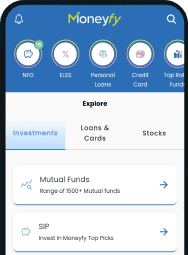

Start an SIP in minutes by signing up with the Tata Capital Moneyfy App. We are your one stop shop for all things investment.

 SMS sent successfully!
An SMS has been sent to XXXXXXX051
Click on the link in the message to download the Moneyfy App.



Looking for a seamless loan experience? Get the Tata Capital Loan App and Apply for loans, Download Account Statement/Certificates, Track your requests & much more.
SMS sent successfully!
An SMS has been sent to XXXXXXX051
Click on the link in the message to download the Moneyfy App.


Thank you for subscribing
We will send news and updates to your registered email ID

Trust the links that start from https://www.tatacapital.com

Do not make payments in any individual’s bank accounts.

Call our Customer Care Number 1860 267 6060 for assistance
For any assistance, contact our customer support


rahul.sharma@gmail.com








 Click allow button to receive notifications




 SMS sent successfully