
Circle Rate and Market Rate
Guide to Circle Rate & Property Market in India

Guide to Circle Rate & Property Market in India

Personal loan starting
@ 10.99% p.a
All you need to know
Personal loan for all your needs
Check Your Credit Score
Higher credit score increases the chances of loan approval. Check your CIBIL score today and get free insights on how to be credit-worthy.
Check Credit Score
Home Extension Loan Affordable Housing Loan PMAYQuick Cash Plot & Construction Loan Balance Transfer Home Loan Top Up Home Loan EMI Calculator PMAY Calculator Balance Transfer & Top-up Calculator Home Loan Eligibility Calculator Area Conversion Calculator Stamp Duty CalculatorKnow MoreCheck Credit Score Home Loan Rates & Charges Home Loan Documents Required Home Loan Online RERA Approved Housing Projects
Business Loan EMI Calculator Business Loan Pre-payment Calculator GST Calculator Foreclosure Calculator Hybrid Term Loan Machinery Loan MSME Loan Small Business LoanBusiness Loan Rates & Charges Business Loan Documents Required
Used Car Loan Loan On Used Car New Car Loan Two Wheeler Loan Used Car EMI Calculator Two Wheeler EMI Calculator Apply Now Apply Now
Know More Apply Now Loan Against Securities Rates & Charges Loan Against Securities Documents Required Loan against Shares Loan against mutual funds Check Credit ScoreLoan Against Securities Rates & Charges Loan Against Securities Documents Required
Know More Apply Now Loan Against Property Rates & Charges Loan Against Property Documents Required EMI Options Hybrid Term Loan Secured BL (SBL) Loan Against Property EMI Calculator
Know More Apply Now Education Loan Rates & Charges Education Loan Documents Required Education Loan EMI Calculator Request a Callback
Know More Microfinance Rates & Charges Microfinance Documents Required Microfinance EMI Calculator Want To Know More? Request a Callback
Rural Individual Loan Know More Rural Individual Loan Rates & Charges Rural Individual Loan Documents Required Rural Individual Loan EMI Calculator Request a Callback
Sign in to unlock
special offers!
Guide to Circle Rate & Property Market in India
Guide to Circle Rate & Property Market in India
Property valuation plays a crucial role in the real estate industry, and one important aspect of this process is understanding circle rates. In this comprehensive guide, we will explore what circle rates are, how they are determined, and their significance in property valuation.
Understanding circle rates is crucial for anyone involved in property transactions or real estate investments. Circle rates serve as a benchmark for property valuation, ensuring transparency, fairness, and compliance with legal requirements. By considering the circle rate alongside the market rate, buyers and sellers can make informed decisions and avoid any discrepancies or legal issues. It is important to stay updated with the circle rates published by the local government authorities to make well-informed choices in the dynamic real estate market.
Remember, whether you are a buyer, seller, or investor, having a clear understanding of circle rates is essential for a successful and profitable real estate journey.
Circle rate, also known as the guideline value or collector rate, is the minimum price at which a property can be registered during a transaction. It is the standard rate set by the government for different areas within a city or locality. Circle rates are usually defined per square foot or square meter and vary based on the location, infrastructure, amenities, and other factors.
Circle value refers to the estimated value of a property based on the circle rate. It is calculated by multiplying the circle rate with the area of the property. For example, if the circle rate is ₹100 per square foot and the property has an area of 1,000 square feet, the circle value would be ₹100,000. Circle value is an essential factor in property valuation as it provides a baseline for determining the property's worth.
While circle rates represent the minimum price at which a property can be registered, market rates are determined by the actual buying and selling prices prevailing in the market. Market rates are influenced by various factors such as demand, supply, location, amenities, and market conditions. It is important to note that circle rates and market rates may differ, and the market rate is generally higher than the circle rate.
The circle rate is the minimum property value set by the government for registration, while the market rate is the actual price agreed between buyers and sellers. The table below highlights the key differences between these two values in property transactions.
| Parameter | Circle Rate | Market Rate |
|---|---|---|
| Definition | The minimum value set by the government for a property in a specific area | The actual price agreed upon between the buyer and the seller |
| Set by | State Government / Revenue Department (based on locality category) | Determined by market demand and supply |
| Revision | Periodically (generally annually) | Fluctuates continuously based on transactions |
| Stamp Duty Base | Used as the base if the market price is lower than the circle rate | Used as the base if the market price is higher than the circle rate |
| Registration Rule | Minimum value for property registration | Taxed on the higher of two |
| Variability | Varies by locality, property type, and land use | Varies by micro-market, floor, amenities, and condition |
Circle rates play a pivotal role in property valuation as they provide a benchmark for determining the fair market value of a property. They ensure that properties are not undervalued during transactions, thus preventing tax evasion and fraudulent practices. Circle rates also help in maintaining uniformity and transparency in property transactions, protecting the interests of both buyers and sellers.
The market rate is a crucial factor when evaluating the value of a property. It is a general indicator of the degree of increase in real estate prices in the given area and is determined by the demand and supply in that area.
Since it is based on the demand and supply of property, it is established on how much the buyer is willing to pay and how much the seller expects. In a way, knowing the market rate can help buyers determine their buying capacity and invest in a property accordingly.
Having knowledge of both the circle rate and the market rate is crucial for anyone involved in property transactions. Understanding the circle rate helps in ensuring that the property is valued correctly and registered at the appropriate price. On the other hand, knowing the market rate enables buyers and sellers to negotiate effectively and make informed decisions based on prevailing market conditions. Comparing the circle rate and the market rate helps identify any discrepancies and ensures fair dealings in the real estate market.
Circle rates are determined by state governments through their Stamps and Registration or Revenue Departments based on property transactions, local development trends, and prevailing land values.
Authorities review property sales recorded in different localities and compare actual transaction prices with the existing circle rate.
If properties are consistently sold above the current circle rate, officials may consider increasing the rate for that area.
District Collectors or Sub-Divisional Magistrates often recommend updates for localities within their jurisdiction.
Before any revision is finalized, the government usually issues a public notice and may consider feedback from property owners, developers, and industry groups.
Each state follows its own revision framework; for instance, Maharashtra publishes a Ready Reckoner, while Delhi and Karnataka update circle or guidance values periodically.
Circle rates vary from one city to another, and they are often revised periodically by the government. To find the circle rate of a specific city, one can refer to the circle rate list published by the local government authorities. These lists provide detailed information about the circle rates for different areas within the city, helping both buyers and sellers in making informed decisions.
| City | Official Site |
|---|---|
| New Delhi | eval.delhigovt.nic.in |
| Kanpur | igrsup.gov.in |
| Noida | gbnagar.nic.in |
| Lucknow | igrsup.gov.in |
| Faridabad | faridabad.nic.in |
| Gurgaon | gurugram.gov.in |
| Agra | igrsup.gov.in |
| Dehradun | dehradun.nic.in |
Circle rates are influenced by several factors that contribute to the overall value of a property. Some of the key factors include the location of the property, the quality of infrastructure in the area, amenities available nearby, access to transportation, and the overall development potential of the locality. Additionally, market trends, demand-supply dynamics, and government policies also impact circle rates. It is essential to consider these factors while evaluating the circle rate of a property.
Finding the circle rate of a property can be easily done through various means. One way is to visit the local sub-registrar's office, where the circle rates for different areas are available. Additionally, many state governments have made circle rates accessible online through their official websites. These websites often provide search options, allowing users to find the circle rate of a particular property by entering the relevant details such as the locality, plot number, or survey number.
You can check the circle rate for a property online through the official registration portal of the respective state government by following a few simple steps.
Visit the official state registration portal: Open the property registration website of the state where the property is located.
For example, Delhi provides a Sub-Registrar portal, Maharashtra uses the IGR Maharashtra website, Karnataka offers the Kaveri portal, Uttar Pradesh operates IGRSUP, and Telangana provides its Registration Department portal.
Select the location details: Choose the district, city, or locality where the property is located. Some portals may also require information such as taluka, ward, mandal, or tehsil.
Enter property information: Provide details such as property type, area category, or survey number.
View the applicable circle rate: The portal will display the current circle rate or guidance value.
These portals help buyers verify property values before proceeding with transactions.
Discrepancies between the circle rate and the market rate are not uncommon, especially in areas experiencing high demand or rapid development. In such cases, the market rate may be significantly higher than the circle rate, leading to undervaluation of properties during transactions. It is essential for buyers and sellers to be aware of these discrepancies and take them into account while negotiating prices to avoid any financial loss or legal implications.
The circle rate directly influences how Tata Capital assesses Home Loan eligibility. The loan amount is approved based on the lower of two values: the property's registered value (which cannot be below the circle rate) or the valuation conducted by Tata Capital’s empanelled valuer. This helps determine a reasonable loan amount based on the property's official and assessed value.
When the market price of a property is much higher than the circle rate, buyers may receive a smaller loan compared to the total purchase price. In such cases, the buyer must pay a larger down payment to cover the difference. This situation is common in areas where developers sell properties at prices much higher than the circle rate. Buyers should therefore consider the gap between the market price and the circle rate when planning their Home Loan and down payment with Tata Capital.
Circle rates also influence property taxes levied by the government. Property tax calculations are often based on the circle value of the property, which is derived from the circle rate. Higher circle rates result in higher property taxes, as they indicate a higher valuation of the property. It is important to consider this aspect while budgeting for property ownership, as property taxes can significantly impact the overall cost of owning a property.
Circle rates have a direct impact on property transactions, as they determine the minimum price at which a property can be registered. Buyers and sellers must consider the circle rate while negotiating the purchase or sale price to ensure compliance with legal requirements. Ignoring or manipulating the circle rate can result in penalties, legal disputes, and even cancellation of the transaction. Therefore, it is crucial to be well-informed about the circle rate before engaging in any property transaction.
For real estate investors, understanding circle rates is essential for making informed investment decisions. Circle rates provide insights into the potential return on investment and the overall value of a property. Investors can analyze the circle rates of different areas and identify those with favorable rates that align with their investment goals. This helps in selecting properties that have the potential for appreciation and can generate substantial returns in the long term.







Submitted successfully





Uh oh, something went wrong
Please try again later.
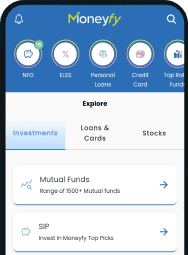

Start an SIP in minutes by signing up with the Tata Capital Moneyfy App. We are your one stop shop for all things investment.

 SMS sent successfully!
An SMS has been sent to XXXXXXX051
Click on the link in the message to download the Moneyfy App.



Looking for a seamless loan experience? Get the Tata Capital Loan App and Apply for loans, Download Account Statement/Certificates, Track your requests & much more.
SMS sent successfully!
An SMS has been sent to XXXXXXX051
Click on the link in the message to download the Moneyfy App.


Thank you for subscribing
We will send news and updates to your registered email ID

Trust the links that start from https://www.tatacapital.com

Do not make payments in any individual’s bank accounts.

Call our Customer Care Number 1860 267 6060 for assistance
For any assistance, contact our customer support




rahul.sharma@gmail.com








 Click allow button to receive notifications





 SMS sent successfully