टाटा कॅपिटल ॲपसह लोनकरिता अप्लाय करा आणि तुमचे अकाउंट मॅनेज करा.आत्ताच डाउनलोड करा

ब्लॉग

सहाय्यता

ऑफर्स क्विक पे

टाटा कॅपिटल > ब्लॉग > पर्सनल यूज लोन > मायक्रो क्रेडिट: व्याख्या, ते कसे काम करते आणि महत्त्व

पर्सनल यूज लोन

मायक्रो क्रेडिट: व्याख्या, ते कसे काम करते आणि महत्त्व

Micro Credit: Definition, How it Works & Importance

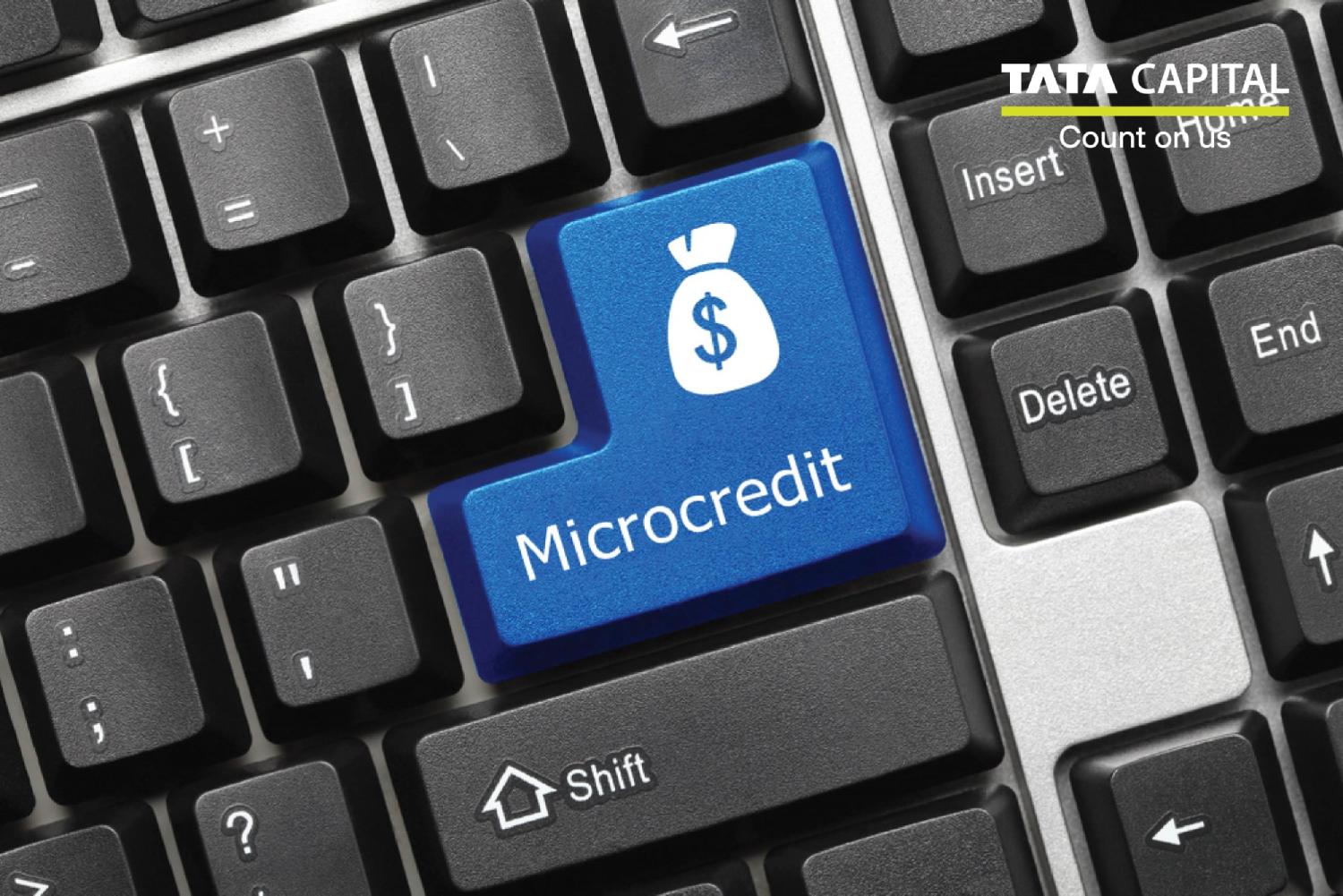
Micro credit loans are small loans. Micro credit, or microfinance scheme, was introduced to benefit people without a steady source of income, credit history, or traditional financial resources. The micro credit system has a major role in developing financial inclusion in India. Through this scheme, microcredit lenders offer easy to formal credit for borrowers across semi-urban and rural sectors of the country.

This article will define micro credit, discuss the key aspects of the micro credit system and its relevance in the lending ecosystem.

मायक्रो क्रेडिट म्हणजे काय?

Microcredit is a small loan given to people who don’t have a regular income or access to banks. It is mainly meant for those living in rural or semi-urban areas who want to start a small business but don’t have the money to do so. These could be farmers, shopkeepers, tailors, artisans, or women running home-based businesses.

Many of these people cannot get loans from regular banks because they don’t have a steady job, a credit history, or assets to offer as security. That’s where microcredit comes in. It gives them a chance to borrow a small amount and use it to earn a living.

Microcredit is usually provided by microfinance institutions, NGOs, or community groups. In many cases, loans are given to a group of people who support each other in repaying the money.

मायक्रोक्रेडिटचे ध्येय केवळ पैसे देणे नाही तर लोकांना स्वत:च्या पायावर उभे राहण्यास मदत करणे आहे.

With these small loans, borrowers can buy tools, raw materials, or goods to sell and slowly build a stable source of income. Over time, it helps improve their quality of life and supports the growth of local businesses.

Also, read – What Are Microfinance Loans

मायक्रो क्रेडिटचा रेकॉर्ड

The origin of the micro credit concept can be traced to 1983 when economist Muhammad Yunus started the Grameen Bank in Bangladesh. He started the bank with the main intention of providing loans to people from lower socio-economic status to reduce the increasing wealth gap in Bangladesh.

In India, microcredit line of finance gained momentum during the 1990s and was officially introduced in 1994. Small Industries Development Bank of India (SIDBI) was one of the pioneer organisations that developed the microcredit scheme in India.

तसेच, वाचा – कोलॅटरल शिवाय MSME लोनवर गाईड

मायक्रो क्रेडिट कसे काम करते

Microcredit is based on the idea that people from low-income backgrounds also want to become self-reliant and start small businesses. However, they often cannot get help from regular banks because they lack a stable income, credit history, or collateral. Microcredit fills this gap by offering small loans through microfinance institutions, NGOs, or local groups.

हे लोन्स सोपे आणि ॲक्सेस करण्यायोग्य असण्यासाठी डिझाईन केलेले आहेत. अनेक प्रकरणांमध्ये, औपचारिक लिखित कराराची आवश्यकता नाही. कर्जदाराला लहान व्याज आकारले जाऊ शकते. काही स्कीमसाठी कर्जदाराला त्यांच्या उत्पन्नाचा लहान भाग नियमितपणे सेव्हिंग्स अकाउंटमध्ये जमा करणे देखील आवश्यक असू शकते. ही रक्कम सुरक्षेचा एक प्रकार म्हणून कार्य करते. एकदा लोन पूर्णपणे रिपेड झाल्यानंतर, कर्जदार पूर्ण सेव्हिंग्स रक्कम विद्ड्रॉ करू शकतो.

मायक्रो क्रेडिट विषयी अतिरिक्त माहिती - मायक्रो क्रेडिट-फंडेड उपक्रम काय आहेत?

मायक्रोक्रेडिटचा वापर मुख्यत्वे लहान, उत्पन्न निर्मिती उपक्रमांना सहाय्य करण्यासाठी केला जातो. यामध्ये कुटीर उद्योग स्थापित करणे, शेतीसाठी बियाणे किंवा उपकरणे खरेदी करणे, मच्छर किंवा विणकाम यासारखे कारागीर काम करणे किंवा लहान दुकान किंवा सेवा व्यवसाय सुरू करणे यांचा समावेश होतो.

या लोनद्वारे, व्यक्ती स्थिर उत्पन्न निर्माण करू शकतात, त्यांच्या कुटुंबांना सपोर्ट करू शकतात आणि हळूहळू आर्थिकदृष्ट्या स्वतंत्र होऊ शकतात.

तसेच, वाचा – मायक्रो प्रॉपर्टी वर लोन (LAP) विषयी सर्वकाही जाणून घ्या

मायक्रो क्रेडिटची वैशिष्ट्ये

Microfinance loans offer various benefits to low-income individuals to make them financially secure and independent.

Here, let’s define microcredit key features:

  • Available for low-income groups and individuals in rural and semi-urban areas of India
  • स्वयं-रोजगार आणि उद्योजकता उपक्रमांसाठी मायक्रोफायनान्स लोन्सचा वापर केला जाऊ शकतो
  • Collateral-free loans with easy affordability
  • Low-amount loans
  • Low and economical rate of interest
  • Not governed by traditional lenders, so quick access to funds
  • पेपरवर्कची किमान आवश्यकता
  • जलद टर्नअराउंड वेळेमुळे जलद लोन प्रोसेसिंग
  • रोजगार उपक्रमाचे स्वरूप आणि कालावधीवर आधारित लवचिक रिपेमेंट पर्याय
  • स्कीम, रिपेमेंट क्षमता आणि आवश्यकतेवर आधारित रिपीट लोन उपलब्ध
  • सामाजिक आणि आर्थिकदृष्ट्या मागास असलेल्या लोकांना उत्पन्न आणि आजीविका सुधारण्यास मदत करते

मायक्रो क्रेडिटचे लाभ काय आहेत?

मायक्रोक्रेडिट अनेक लाभ प्रदान करते, विशेषत: पारंपारिक फायनान्शियल सर्व्हिसेसचा ॲक्सेस नसलेल्यांसाठी:

  • हे सामान्यपणे पारंपारिक बँकिंग सिस्टीममधून वगळलेल्या व्यक्तींना आर्थिक ॲक्सेस प्रदान करते.
  • हे लोकांना उत्पन्न कमविण्यास आणि त्यांचे जीवनमान सुधारण्यास सक्षम करून दारिद्र्य कमी करण्यास मदत करते.
  • हे महिलांना स्वतंत्र होण्यासाठी आणि त्यांच्या घरांमध्ये योगदान देण्यासाठी आर्थिक सहाय्य प्रदान करून सक्षम करते.
  • हे व्यक्तींना स्थानिक पातळीवर लहान व्यवसाय सुरू करण्यास किंवा वाढवण्यास मदत करून उद्योजकतेला प्रोत्साहन देते.
  • हे स्थानिक अर्थव्यवस्था मजबूत करून आणि दीर्घकालीन प्रगतीला प्रोत्साहन देऊन समुदाय विकासाला सहाय्य करते.

तसेच, वाचा – मुद्रा लोनसाठी पात्रता निकष

मायक्रोक्रेडिटचे प्रकार

भारतात ऑफर केलेल्या विविध प्रकारच्या मायक्रोक्रेडिट्स आहेत:

  • मायक्रो लोन्स - हे कोणत्याही तारणाशिवाय दिलेले लहान लोन आहेत. ते कर्जदारांना लोन प्रोसेस समजून घेण्यास आणि क्रेडिट रेकॉर्ड तयार करण्यास मदत करतात. कालांतराने, हे त्यांना बँक किंवा इतर औपचारिक लेंडरकडून मोठ्या लोनसाठी अप्लाय करण्यास तयार करते.
  • मायक्रो सेव्हिंग्स - मायक्रो सेव्हिंग्स अकाउंट कमी उत्पन्न असलेल्या लोकांसाठी डिझाईन केलेले आहेत आणि किमान बॅलन्स राखण्याची आवश्यकता नाही. हे अकाउंट नियमित सेव्हिंग सवयींना प्रोत्साहित करतात आणि व्यक्तींना त्यांच्या डिपॉझिटवर व्याज कमविण्यास मदत करतात.
  • मायक्रो विमा - मायक्रो विमा कमी प्रीमियम रेट्सवर मायक्रोलोन कर्जदारांना कव्हरेज प्रदान करते. हे अपघात, आजार किंवा इतर आपत्कालीन परिस्थितीमुळे होणाऱ्या आर्थिक जोखमींपासून व्यक्ती आणि कुटुंबांचे संरक्षण करते, जे अनिश्चित काळात सिक्युरिटीज प्रदान करते.

Eligibility Criteria for Micro Credit Schemes in India

All micro credit schemes have specific requirements and restrictions, which is why it’s essential to know micro credit eligibility before applying. Applicants must be Indian citizens who meet the age and scheme criteria.

For example, the National Handicapped Finance and Development Corporation (NHFDC) scheme requires at least 40% disability and applicants over 18 (14 in some cases). The Pradhan Mantri Mudra Yojana (PMMY) is for citizens aged 18–65 with business plans for income-generating activity.

Understanding who can get micro credit is helpful for a frictionless application process.

भारतातील मायक्रो क्रेडिट ऑपरेशन चॅनेल म्हणजे काय?

भारतात, मायक्रोफायनान्स मुख्यत्वे दोन चॅनेल्सद्वारे संचालित केले जाते: एसएचजी - बँक लिंकेज प्रोग्राम (एसबीएलपी) आणि मायक्रोफायनान्स संस्था (एमएफआय).

SHG - बँक लिंकेज प्रोग्राम (SBLP)

The National Bank for Agriculture and Rural Development (NABARD) launched the SBLP initiative in 1992. The model focuses on supporting women from economically backward classes in self-help groups of 10-15 members to become financially independent. Women in self-help groups contribute their savings within the groups. Later, the investment is used to offer loans for funding activities that help generate income for the members.

मायक्रोफायनान्स संस्था (एमएफआय)

MFIs aim for joint liability for seeking loans. Under an MFI microfinance scheme, an informal group of 4-15 individuals can avail of a loan either individually or jointly.

Apart from these two channels, there are certain banks and social organisations like non-profit ones, that offer microloans to borrowers.

Who Provides Micro Credit? (Microfinance Institutions & Banks)

In India, microcredit is offered by various microfinance providers, institutions, banks, and even NGOs. The objective is to support low-income individuals and small businesses.

Some specialized microfinance institutions include Non-Banking Financial Companies (NBFC-MFIs) and NGOs like the Chaitanya India and FINCA International.

Banks can also play a role in providing microcredit. There are commercial banks and small finance banks that provide microcredits through different schemes and through their partnerships with MFIs.

Government institutions support other microcredit providers. They work with MFIs and banks. This increases the number of verified and trusted microfinance providers. Individuals and businesses are able to benefit from this network of microcredit lenders India.

Challenges and Criticisms of Micro Credit

Despite their benefits, it is important to be aware that microcredit comes with several micro credit challenges.

  • Sometimes, borrowers use loans for daily expenses rather than starting or growing a business, which can lead to excessive debt.
  • Some MFIs offer higher interest rates, which can make repayment harder.
  • The governance of microcredit can be tricky. A lack of awareness in the general public and newer technological challenges in microcredit adoption are examples.

These disadvantages of micro credit show why borrowers need to plan carefully and choose trustworthy microcredit lending institutions.

मायक्रो क्रेडिटच्या स्कीमची यादी

भारतात अनेक मायक्रोक्रेडिट योजना आहेत ज्या व्यक्तींना लहान व्यवसाय सुरू करण्यासाठी किंवा विस्तारण्यास सहाय्य करतात. काही प्रमुख उपक्रमांमध्ये समाविष्ट आहे:

  • राष्ट्रीय शहरी आजीविका मिशन (एनयूएलएम)
  • महिला समृद्धी योजना
  • स्टँड-अप इंडिया योजना
  • National Handicapped Finance and Development Corporation (NHFDC)
  • मायक्रो युनिट्स डेव्हलपमेंट अँड रिफायनान्स एजन्सी लिमिटेड (MUDRA)
  • भारतीय लघु उद्योग विकास बँक (SIDBI)
  • राष्ट्रीय कृषी व ग्रामीण विकास बँक (NABARD)
  • National Scheduled Tribes Finance and Development Corporation (NSTFDC)
  • प्रधानमंत्री मुद्रा योजना (PMMY)

These schemes aim to improve financial access, especially for marginalized and underprivileged communities.

निष्कर्ष

Micro credit is a key factor in the success of financial inclusion in India. The small loan scheme has helped eradicate poverty in India over the last few decades by helping lower-income and socially backward classes improve their income and standard of living.

The vast Indian population largely exists in rural areas, where there is a lack of access to traditional banking services. However, people from low-income groups need financial services to meet their basic needs. Micro credit has helped bridge this gap. Through microfinance, even people from lower strata of society can access financial services to enhance income and self-sufficiency.

Tata Capital offers easy and attractive microfinance loan interest rates. Borrowers can avail of a quick loan up to Rs. 2 lakh with minimal documentation, flexible tenure, and EMI repayments. Tata Capital microfinance loans are customised to suit borrowers’ varying loan needs. For more details, visit Tata Capital.

लोन विषयी अधिक

सामान्य प्रश्न

What are microcredit-funded activities?

Microcredit usually supports small-scale work like farming, handicrafts, cottage industries, and local businesses. It helps people start or grow income-generating activities at a grassroots level.

मायक्रो क्रेडिटचे उदाहरण काय आहे?

Grameen Bank in Bangladesh is a well-known example. It gives small loans to low-income individuals, especially women, to help them start or grow small businesses.

मायक्रो लोनची मर्यादा काय आहे?

₹ 3 लाख पर्यंत वार्षिक घरगुती उत्पन्न असलेल्या लोकांना मायक्रो लोन्स ऑफर केले जातात. हे लोन्स लहान आहेत आणि कोणत्याही तारणाची आवश्यकता नाही.

मायक्रो क्रेडिटसाठी कोण पात्र आहे?

मायक्रोक्रेडिट हे लघु व्यवसाय मालक, शेतकरी आणि महिला उद्योजकांसारख्या कमी उत्पन्न असलेल्या व्यक्तींसाठी आहे जे नियमित बँक लोन किंवा फायनान्शियल सर्व्हिसेस ॲक्सेस करू शकत नाहीत.

मायक्रो क्रेडिट नेहमीच यशस्वी आहे का?

नेहमीच नाही. हे अनेकांना मदत करत असताना, काही कर्जदारांना सामाजिक किंवा फायनान्शियल आव्हानांमुळे उच्च व्याजदर, डेब्ट प्रेशर किंवा मर्यादित परिणाम यासारख्या समस्यांचा सामना करावा लागतो.

मायक्रो क्रेडिट म्हणजे काय?

Micro credit meaning is small loans that are designed for low-income individuals, businesses, or groups that do not have proper access to traditional banking. Micro credit helps groups start or expand their businesses, support income-generating activities, especially for people in rural areas.

How does micro credit differ from a traditional bank loan?

Micro credit offers smaller loan amounts. These are often provided without collateral through MFIs, banks, and NGOs and are aimed at helping underserved communities. Traditional bank loans offer much larger amounts, tend to require collateral, and have stringent eligibility criteria.

What are the main features of micro credit?

Micro credit usually involves small amounts, short repayment periods, and minimal paperwork and collateral requirements. Some programs also offer guidance on using the loan responsibly. These loans mainly help people earn income, start businesses, or cover essential needs, especially for financially vulnerable groups of people.

What are the different types of microcredit available?

Microcredit is offered in different forms. For example, individual loans go to a single person, group loans support a group of people starting a business, agricultural loans can fund farming or livestock, and microenterprise loans help small businesses grow. Some micro credit loans cover personal or household needs.

Who is micro credit designed for in India?

In India, microcredit is designed for low-income individuals, small business owners, and rural communities. In such schemes, women and marginalized groups are often prioritized. These schemes usually help people who are unable to take the traditional bank loan route for their needs.

What is the average loan amount under micro credit?

In India, microcredit loans are usually up to ₹3 lakh. The exact amount is variable. That depends on the borrower, their income, and the purpose of the loan. These loans are designed to help start or grow businesses, support agriculture, or cover essential personal needs.

What role does micro credit play in financial inclusion?

Microcredit helps people who don’t have access to regular banking. It gives them a chance to earn income, start businesses, and improve their quality of living. Micro credit also helps build credit history, especially for women and low-income communities, giving them more opportunities in the future.